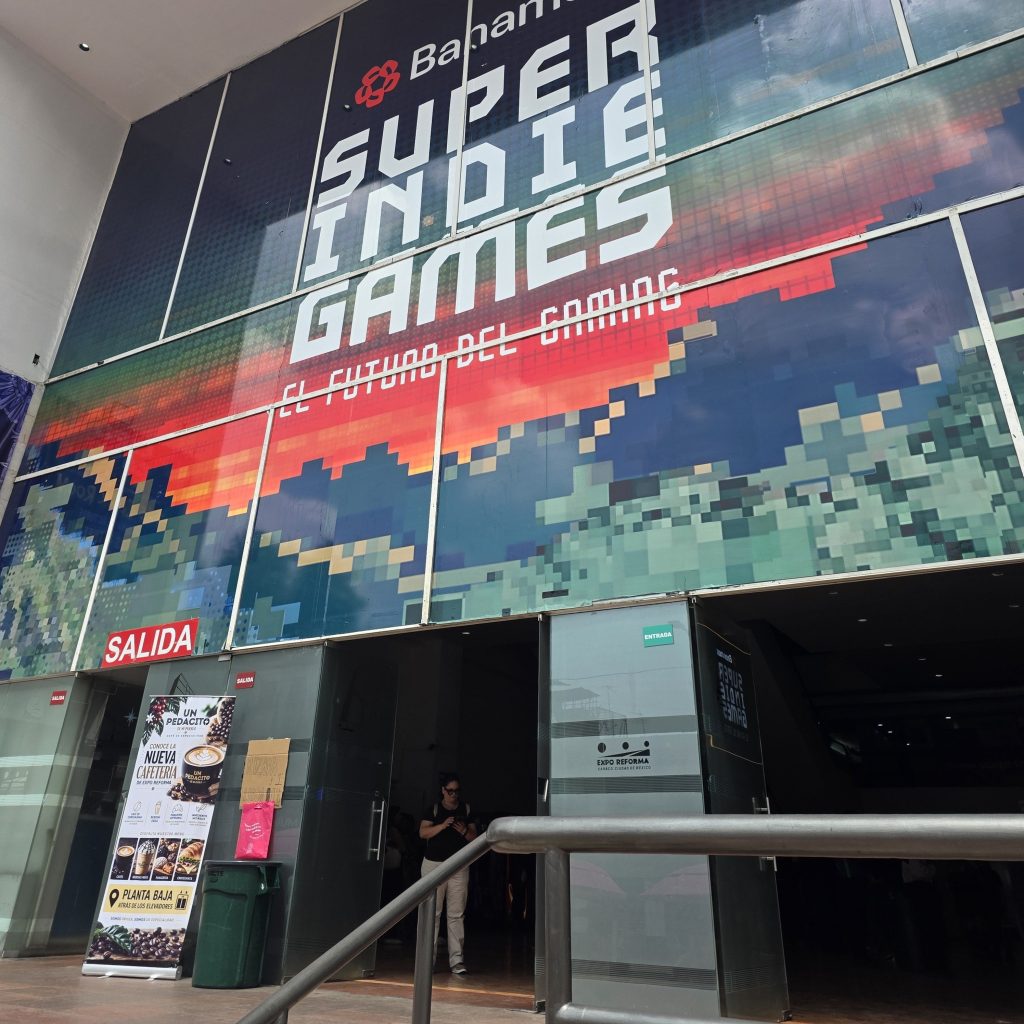
On October 3 and 4, I attended Super Indie Games 2026 in Mexico City. I went in expecting to discover games, talk to developers, and sit in on a few talks, but I came back thinking about something much bigger: where Mexico’s game industry stands right now.
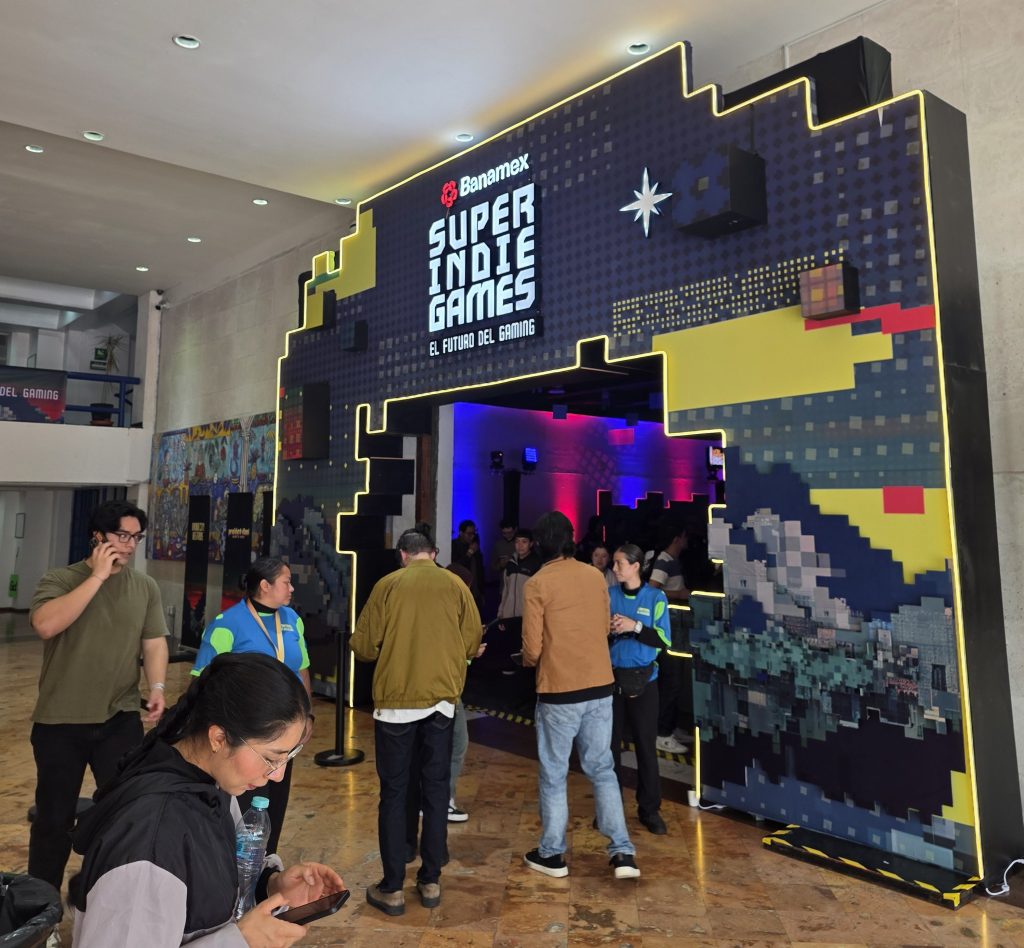
More than leaving with one particular game in mind, I left thinking about talent, marketing, community, networking, and, above all, how scattered we still are even though more and more people are doing really good work.
For a long time, whenever we talked about games made in Mexico, there was almost an unspoken obligation to say, “we should support it because it’s Mexican.” I completely understand where that comes from. Our industry is still young, for years there were only a handful of visible projects, and even fewer games that looked ready to compete internationally.
But I think we need to start moving past that stage.
I don’t want to play a game just because it was made in Mexico. I want to play it because it’s good, and then feel proud when I find out it was made here too.
I even think that, for a while, the “Mexican game” label could work against a project. When an industry is still finding its footing, a couple of bad experiences can create prejudice very quickly. If someone had tried one or two local games they didn’t like, it was easy to generalize and assume the next one would be the same.
That’s why I’m more excited by projects that don’t need to rely on nationality to get attention. First, they pull you in because of what they are: the gameplay, the art direction, the concept. Then you find out where they came from.
I basically stayed on the second floor all Saturday
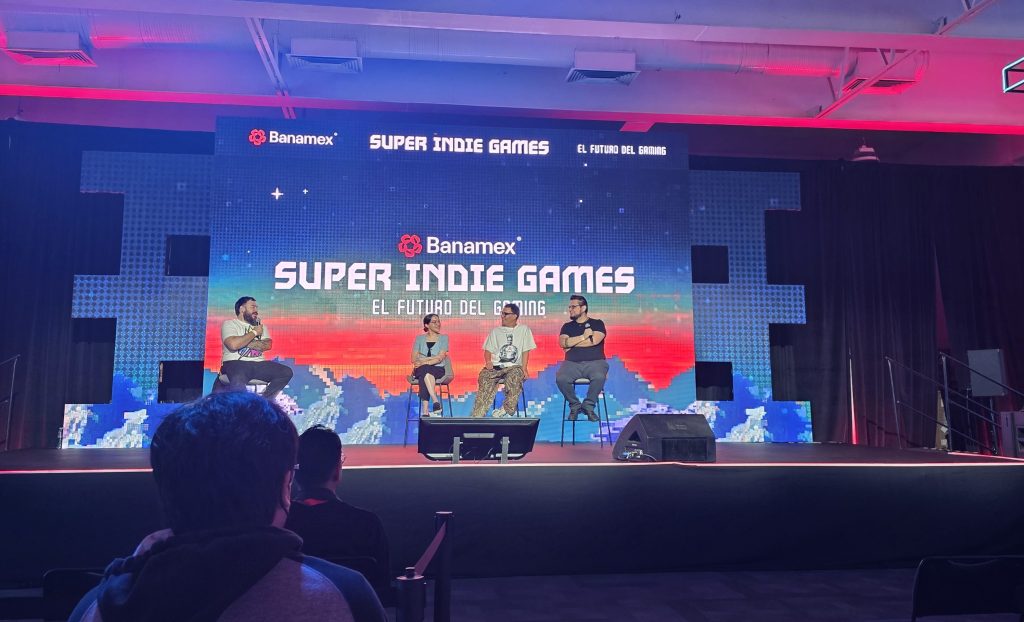
On the first day, I decided to stay for almost every talk on the Banamex stage. I got to hear from people with very different backgrounds in the Mexican game industry: Paola Vera from Mácula Interactive, the studio behind Mexico, 1921; Anwar Noriega, co-founder of Wabisabi Games, the studio behind RKGK; Ovidio Escobedo from 1 Simple Game; and Antonio “Fáyer” Uribe, co-founder of HyperBeard and one of the people behind KleptoCats.
Out of all those talks, there was one idea from Ovidio that really stayed with me: it used to be hard to make a game and relatively easy to sell it. Today, it’s much easier to make one, but much harder to get anyone to notice it.
I think that sums up the indie problem pretty well.
Today we have accessible engines, assets, tutorials, communities, free tools, and much more information than we did ten or fifteen years ago. The barrier to making a game has dropped a lot. At the same time, there are more games than ever competing for attention.
So the challenge is no longer just making something good.
You also have to get someone to stop and look at it.
That’s where marketing comes in. Not as something you add at the end, but as part of development much earlier on. You need to know how you’re going to talk about your game, what makes it understandable in seconds, who you’re speaking to, and what kind of player is most likely to connect with it.
AI should polish talent, not replace it
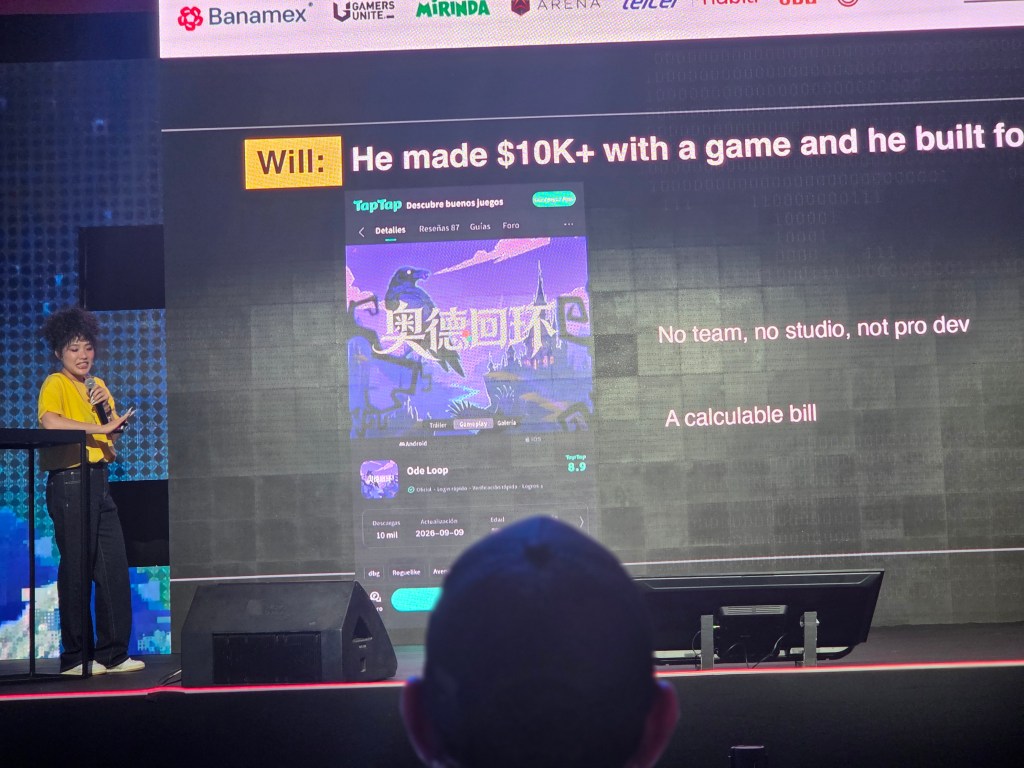
Another talk I found interesting was Ningning Wang Morel from Tripo AI, speaking about the use of artificial intelligence in game development.
AI still creates a lot of resistance, and in some cases for good reason. That’s exactly why I liked seeing it discussed from a more practical point of view.
To me, the right path is not using AI to remove talent from the process, but to help polish that talent, speed up certain tasks, and solve bottlenecks that used to eat up a lot of time.
In an indie team where one person may already be wearing five different hats, a tool that helps you iterate faster can be incredibly valuable. But the important part is still who is making the decisions, who defines the identity, and who turns those tools into something intentional.
Technology can speed up the process, but it shouldn’t replace the sensibility of the people making the game.
When someone with international experience tells you Mexico can compete
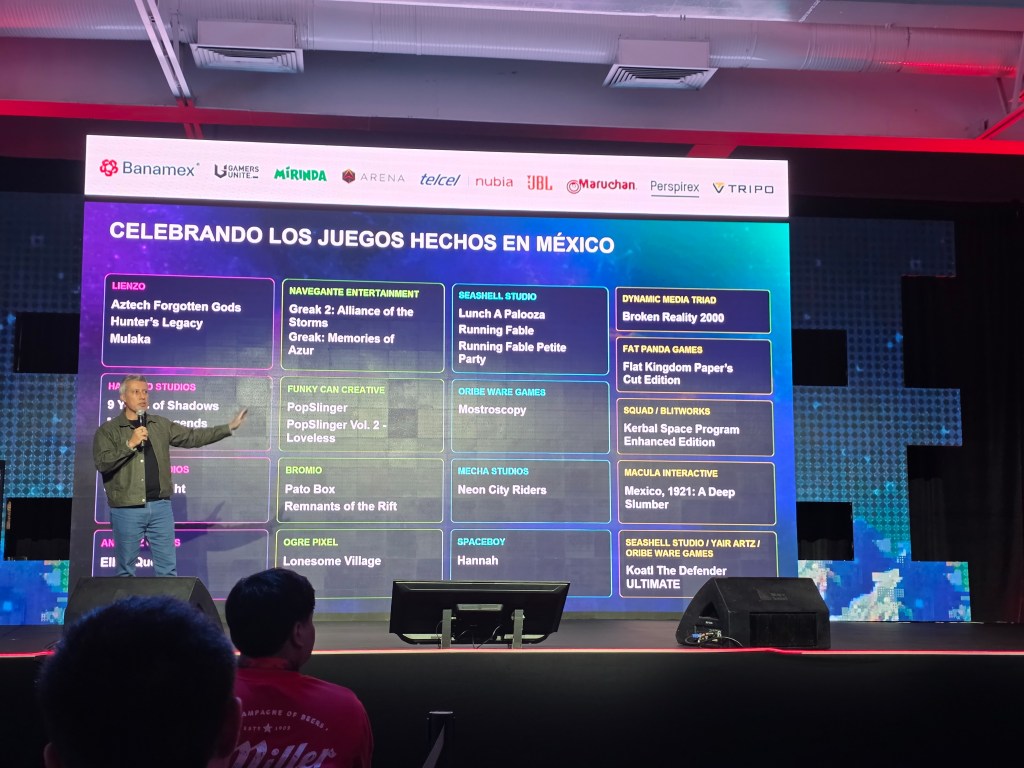
Later, I listened to Esteban Lora from Xbox talk about the talent that exists in Mexico. And I think that kind of message carries a different weight when it comes from someone who has worked inside a company like Xbox and has seen projects at an international scale.
Hearing someone with that level of experience say openly that Mexico has what it takes to compete in the big leagues is definitely motivating.
But the biggest surprise of the day was the announcement of Xbox Game Camp, which is set to begin this month and will have a Mexico edition for the first time.
That felt important.
Not just because Xbox is behind it, but because it represents something we still need: structure to develop talent, connect studios, create opportunities, and give more visibility to the people already working in this space.
For a young industry, initiatives like that can make a much bigger difference than they may seem to at first.
Doug Bowser and a conversation that already feels different
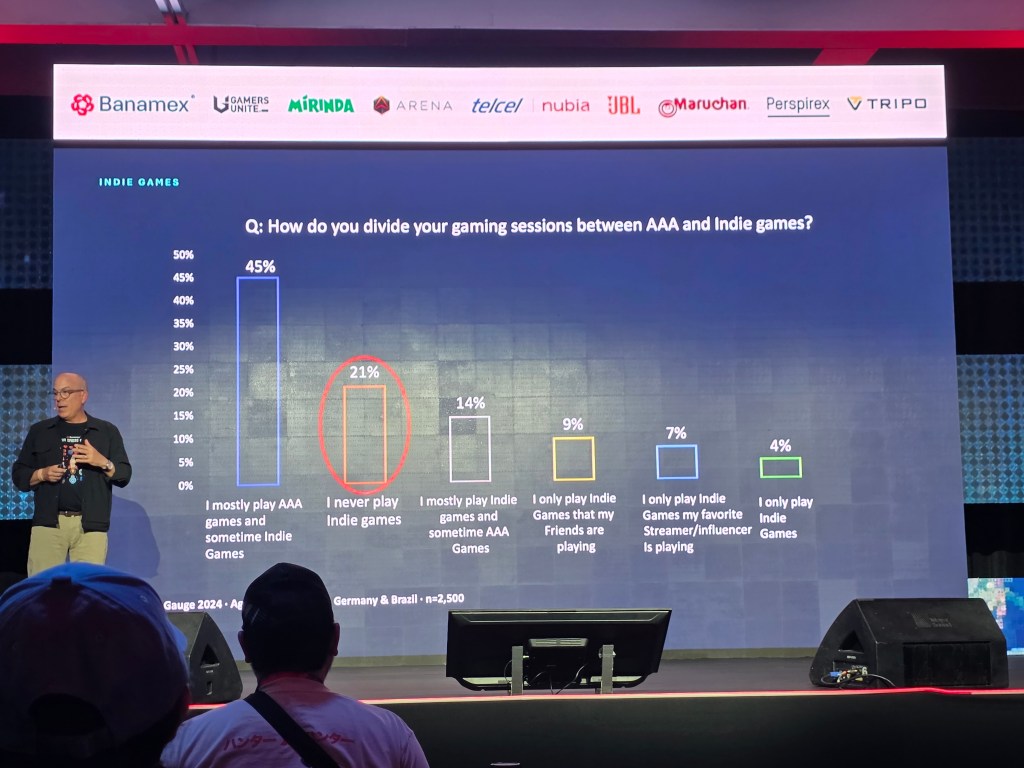
The final major talk on Saturday was from Doug Bowser, former president of Nintendo of America, speaking about the international challenges facing the industry and the opportunities Mexico has in front of it.
What I liked about the overall context of the day was that the conversation no longer felt like, “maybe one day Mexico could make games.”
It felt more like: Mexico is already making them. How do we take this to the next level?
That may sound like a small difference, but to me it changes everything.
Caterva: a game that felt like it had heart
At the end of Saturday came the Devs Challenge awards.
I had already seen Caterva: Outsider Dreams during the reality show they produced before the event, so I didn’t go into the competition completely cold.
I liked them from the start.
Not because I knew them personally, but because something was hard to fake: the game had heart. And so did the team.
You could see the passion in the way they talked about the project, the doubts they had, how much they wanted to move forward, and how they reacted as they advanced through each stage. As a viewer, I ended up getting emotionally invested in their progress.
When they finally won first place, I was genuinely happy for them.
I think that also says something important about game marketing. Sometimes we connect with a project not only because of the product, but because of the people and the story behind it.
Naica and why a game needs to make sense fast
Another project that really caught my attention was Naica.
When I tried to describe it to someone during the event, I ended up saying it felt like a mix of Celeste and Indiana Jones.
Of course, no comparison tells the whole story of a game, but it does explain quickly what pulled me in: platforming, adventure, exploration, and a very clear identity.
And that connects right back to marketing.
When a game can make you understand very quickly what kind of feeling it wants to give you, that’s a huge advantage. You don’t need to start by explaining twenty systems. First you need to create curiosity. You can explain the rest later.
Elders K.O. and a story I wasn’t expecting
Elders K.O. finished second in the Devs Challenge. At first glance, the premise is very easy to understand and very funny: senior citizens beating each other up in minigames.
But then I spoke with the team, and the conversation went somewhere I wasn’t expecting.
They explained that some of the characters, voices, and images were inspired by real people close to them, including family members who are no longer here.
And yes, my eyes got a little watery.
I was very close to my grandmother, so hearing where those older characters came from hit me much harder than I expected. Suddenly, I stopped seeing only a funny game about old people fighting and started seeing something much more personal behind it.
This is exactly one of the reasons I like going to events like this. There are stories you will never discover from a trailer or a Steam description. You learn them when you talk to the people who made the game and they tell you why it exists.
Fuzz and Dizzy and learning to work with what you have
I also got the chance to spend more time with Fuzz and Dizzy: Part-Time Heroes, a project with a very strong retro aesthetic that can immediately bring something like Cuphead to mind, while still having its own identity.
What interested me most was getting to talk with part of the team, especially about the music. They told me how they had to work within a limited budget and adapt their ideas to the instruments and resources they actually had available.
And I thought that was a great lesson in indie development.
You don’t always have the ideal budget, the ideal team, or every tool you wanted. A lot of talent is also about knowing how to solve problems with what you do have. Instead of waiting for the perfect resources to magically appear, you find a way to move forward.
I hope the game does well enough that one day they can take those musical ideas even further.
On Sunday, I was much more selective
After trying to absorb almost the entire Saturday program, I decided to focus on three talks on Sunday that were much more closely tied to the things I personally care about: industry, marketing, and influencers.
The first was “Mexico Plays Seriously: Building a Video Game Industry”, with Hugo Abel Castro, Blanca Estela López Pérez, and Ernesto Piedras.
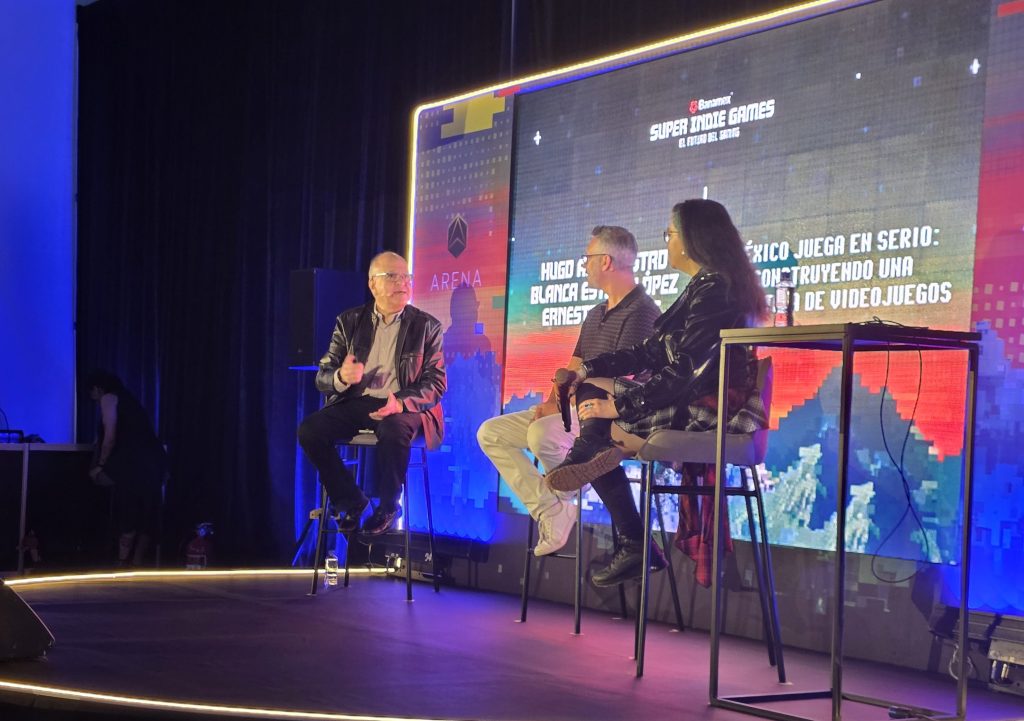
I already followed Hugo and had connected with him through social media, so I was glad to finally meet him in person. I also find his work especially interesting because he is part of the group of people having conversations with institutions and government about how to give the Mexican game industry more structure.
And I think that was one of the most important ideas in the talk.
If we really want to talk about an industry, we can’t think only about making games. A studio has to start seeing and managing itself as a business. It needs structure, contracts, intellectual property, finance, marketing, production, HR, legal support, and a strategy that allows the project to survive beyond a single release.
That also changes the conversation about who gets to work in games.
Sometimes someone says they would love to work in the industry and immediately follows it with, “But I don’t know how to code.”
I think that’s a very limited way to think about what it actually takes to build a studio.
I come from marketing, and I don’t know how to code a game. That doesn’t mean I can’t contribute to this industry. A lawyer can be essential when you start dealing with intellectual property, publisher contracts, or distribution agreements. A finance professional can help turn a creative project into a sustainable company. A psychologist can contribute through player behavior, UX, or research. You also need musicians, communicators, producers, HR specialists, project managers, and many other disciplines.
The more professional a studio becomes, the more obvious this gets: making a game requires much more than developers.
And I think that’s exactly one of the points worth reinforcing from Hugo’s talk. If we want Mexican studios to grow, we also need to stop thinking of them only as groups of people making a game in their spare time. At some point, they have to become organizations capable of managing talent, money, intellectual property, and commercial relationships.
That opens the door to a lot of people who may be looking at the industry from the outside and assuming there is no place for them.
Marketing in a saturated industry
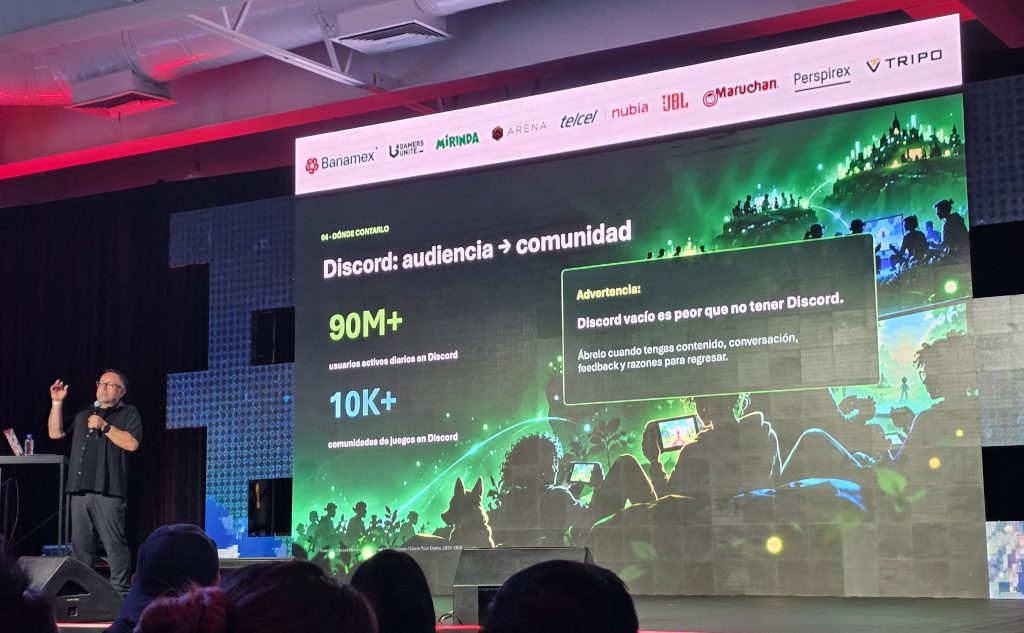
After that, I went to see Jaime Limón speak in “Video Game Marketing in the Age of Saturation: The Other 50% of Making a Successful Game.”
This one connected with me immediately because this is exactly the side of the industry I work in.
You can make a very good game, but that doesn’t mean people are going to find it on their own. Today, competing for attention is part of product development.
It’s no longer enough to finish the game and open your Steam page a few months before launch.
You need to know who you’re talking to, what other games that audience plays, how to explain your idea in seconds, and what kind of content can make someone stop and pay attention.
A good product is still the most important thing, but a good product with no visibility can disappear very quickly.
Influencers: focus on the people who actually play games like yours
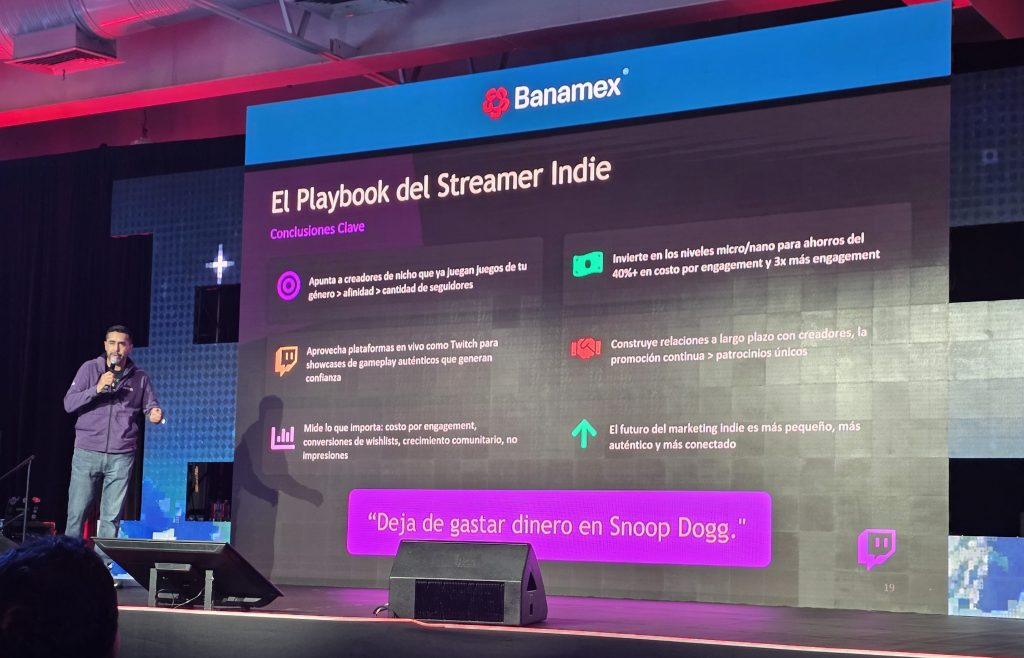
The final talk I attended was “Indies and Influencers: What to Do and What Not to Do”, with Ignacio Estanga, VP of Partnerships for Latin America and Iberia at Twitch.
The biggest takeaway for me was very simple: focus on the people who play your type of game.
It doesn’t matter how big a creator is if their audience doesn’t consume games like yours. There’s no point obsessing over the biggest streamer if they never play your genre.
It’s much smarter to focus on a niche.
If you’re making a roguelike, look for creators who play roguelikes. If you’re making a cozy game, look for cozy game communities. If you have a tactical RPG, find the people who already consume tactical RPGs.
A much smaller audience that is genuinely interested in your genre can be far more valuable than a huge channel whose community would never have bought your game in the first place.
I think that’s a lesson many indie developers still need to internalize. You don’t need to reach everyone. You need to reach the right people.
You probably won’t sell much at an event, but that doesn’t mean it isn’t worth it
After attending events like Tokyo Game Show and now Super Indie Games, I believe more and more in the value of showing a game in person.
Not necessarily because you’re going to recover your travel costs by selling copies at the event. You probably won’t.
But there is something much more valuable: validation.
You can watch someone play your game right in front of you. You see where they laugh, where they get lost, what they understand immediately, what you have to explain, what they try to do that you never expected, and at what point they stop playing.
That kind of in-person feedback can be brutal, but it’s immediate.
And then there’s everything happening around the game itself: meeting other developers, publishers, musicians, marketing people, media, creators, and people who are simply trying to find their way into the industry.
Mexico has talent. What we still need is to connect it
After those two days, that was probably the idea that stayed with me the most.
Mexico has talent, good projects, and more and more people trying to professionalize the industry from different angles. There are developers, investors, people working through institutions, marketing specialists, musicians, illustrators, lawyers, and creators already forming part of the ecosystem.
The problem is that we are still pretty scattered.
There are communities and studios in Mexico City, Guadalajara, Monterrey, and many other parts of the country, but we often keep working inside small circles that barely know each other. A developer may be looking for exactly the kind of profile someone else wants to offer and simply not know that person exists.
That’s where I think events like Super Indie Games have value far beyond going there to try new games.
They help us meet, put a face to someone you followed online, discover projects you didn’t know existed, and understand that there are many more ways to take part in this industry than we usually imagine.
They also create something that isn’t always easy to measure right away: connections. A game may not sell hundreds of copies during the event, but its developer might meet a publisher, a composer, someone in marketing, or another developer they end up collaborating with later.
Those relationships are hard to measure, but for a young industry they can be much more important than they seem.
After Super Indie Games 2026, I’m even more convinced that Mexico doesn’t have a talent problem. What we need is to connect that talent better, professionalize it, and learn how to communicate what we’re doing beyond our own circles.
The games are already here.
Now we need to make sure more people know about them.