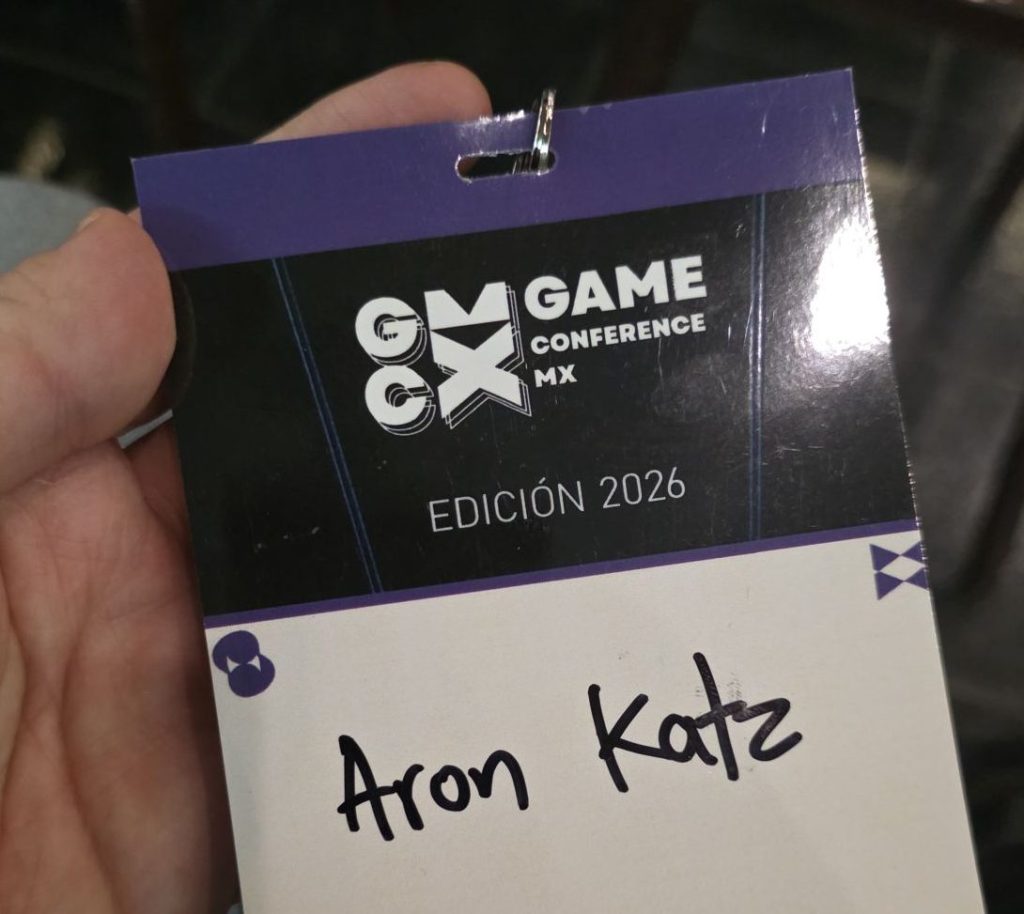
Game Conference MX 2026 was one of those events I am genuinely glad exists. Not just because of the amount of content, games, or people involved, but because once you get to know a little about the team behind it, you can tell how much care goes into what they are building and how serious they are about helping the industry grow. GCMX held its fourth edition on November 13 and 14, 2026, at Salón Fiesta Guadalajara, bringing together more than 1,580 attendees from 12 countries, over 85 video games, more than 45 speakers, and over 600 business meetings.
Guadalajara also feels like a natural home for an event like this. For years, the city has been producing studios, developers, projects, and gaming communities, making it one of the country’s important industry hubs. This is no longer just about “making games in Mexico.” It is about building studios, securing investment, learning how to sell, finding publishers, meeting people, and eventually competing beyond our borders. That is exactly why I like the way GCMX combines the business side of the industry, professional content, and a huge variety of games you can actually play.
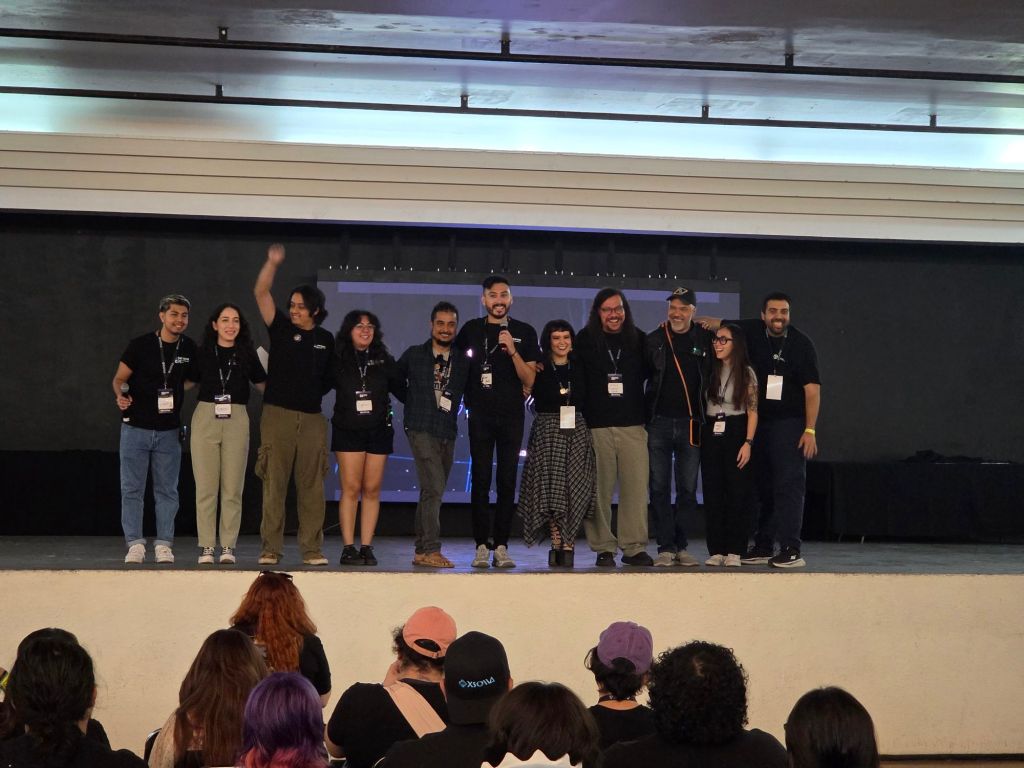
Behind the event is Abner Sable, GCMX Founder & CEO, alongside Karen Sánchez, co-founder and Finance Director; Cynthia Citlalli, co-founder and Logistics Director; Daniel Torres, co-founder and Image Director; Brayan Millán Reyes, Social Media & Community Manager; and Mario Valle, Board Member & Advisor. The story behind GCMX starts with a pretty straightforward idea: create the space its organizers wish they had found when they were starting their careers, connecting Mexican and Latin American talent with professional infrastructure, knowledge, and international relationships.
Day 1: Too many interesting things happening at once
The opening took place on Friday the 13th, and from the very first hours I ran into one of the things I enjoy most, but do not entirely enjoy, about these events: too much was happening at the same time. Between the Dev Stage, Player Stage, the B2B area, and all the other activities, you inevitably have to choose and accept that you will miss something. As a visitor, it is ultimately a great thing because there are plenty of options and you can shape your own experience, even if that means missing a talk you really wanted to attend.
The first talk I attended was “Cómo anunciar un videojuego: wishlists, prensa y redes sociales” (How to Announce a Video Game: Wishlists, Press, and Social Media), by Jorge Blanco. As someone who works in marketing, I am always interested in hearing real experiences about promoting games because, unlike some other industries, I feel that game marketing still has a lot of room to explore and very few rules that are set in stone. Every game has a different community, genre, mix of channels, and stage of development that completely changes what you can communicate. Hearing how somebody else dealt with those challenges always gives you something you can apply to your own projects.
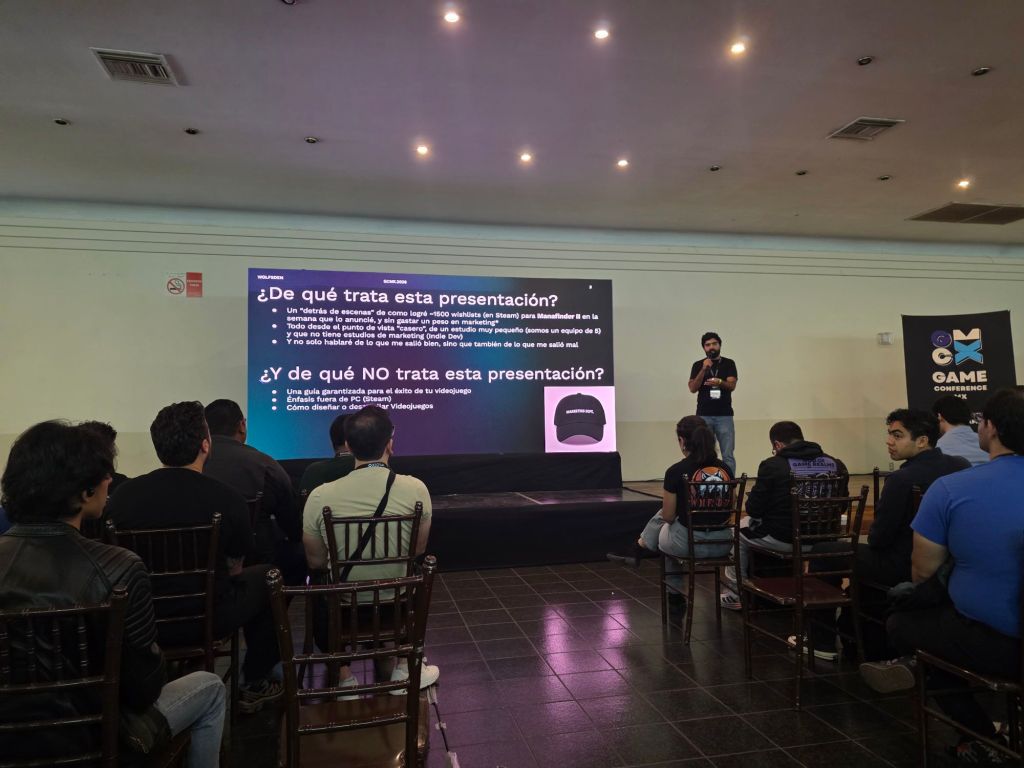
Next was “Qué NO hacer para mejorar las posibilidades de éxito en la industria de los videojuegos” (What NOT to Do to Improve Your Chances of Success in the Video Game Industry), by Carlos Jiménez. This talk looked at the less glamorous side of the process: mistakes, decisions that did not work, and situations that can hurt a project. I think it is especially useful to have spaces like this because in gaming we often see the finished product or the success story, but rarely everything that went wrong on the way there.
I also attended the “Negocios e industria” (Business and Industry) panel with Jaime Limón, Abner Sable, and Deneb Castillo, moderated by Mario Valle. The discussion covered some of the less romantic realities of working in games, not only in Mexico but in a global industry where making a good game does not necessarily mean you will build a sustainable business. Talent matters, but so do structure, financing, networking, commercial skills, and knowing when a project needs to stop being viewed purely as a creative endeavor and start being treated as a product too.
Another session that particularly interested me was “I Have a Game… Now What?”, presented by Efren Fregoso Jimenez from Xsolla. Xsolla works with developers and publishers through tools and services related to launching, growing, and monetizing games, including payments, direct-to-consumer commerce, distribution, marketing, and player engagement. In this talk, Efren focused specifically on how development experience, pitching, and monetization can help maximize a game’s reach and build a more sustainable studio. I found that especially relevant because people often spend so much time thinking about finishing their game and not nearly enough about everything that needs to happen afterward to turn it into a viable business.
Later I attended “No solo hagas juegos, haz negocio” (Don’t Just Make Games, Build a Business), by Deneb Castillo, which reinforced something I have been hearing at several events over the past few months: passion may get you started on a game, but you need to think like a business if you want to keep making the next one. I also attended “Steam: antes del lanzamiento” (Steam: Before Launch), by Irene Molina, which went through how to set up a Steam page and all those details that may seem small but can influence how you present your game, earn wishlists, and prepare for release.
Hearing your game performed by an orchestra must feel surreal
The first day ended with one of my favorite ideas from the whole event: GameMex Sinfónico, a concert dedicated to original music from Mexican video games. The project was created and directed by composer Jimena Contreras, and the Guadalajara performance featured the Orquesta Juvenil de Occidente conducted by Naim Alfaro.
The program included music from games such as Dungeon Killer, Hollow Stories: Lockdown, Glory Hunters, Hellbound Inc., So Below, Neon City Riders, and PancitoMerge, among others. PancitoMerge, with music by Majo Félix, was especially interesting to me because it attracted a lot of attention during 2026 with a concept that is both incredibly simple and instantly recognizable: turning Mexican sweet bread into a merging game. Seeing something that started as an indie project make its way onto a symphonic stage must be a pretty surreal experience for any developer or composer.
It also got me thinking about how some games can find a second moment in the spotlight months after launch. Marketing is sometimes treated as something that revolves entirely around release day, but a concert, an update, a collaboration, or another cultural moment can be a perfectly good reason to put a game back in front of people.
Day 2: More games and catching up with familiar faces
On Saturday, I decided to spend much more time exploring booths and talking to developers. GCMX really delivered in terms of the number and variety of projects on display: more than 85 games were part of Indie Spot, including titles from Mexico and other Latin American countries. There were games for PC, consoles, and quite a few mobile games too, which I liked because it challenges the idea that every indie game has to look like a traditional Steam release.
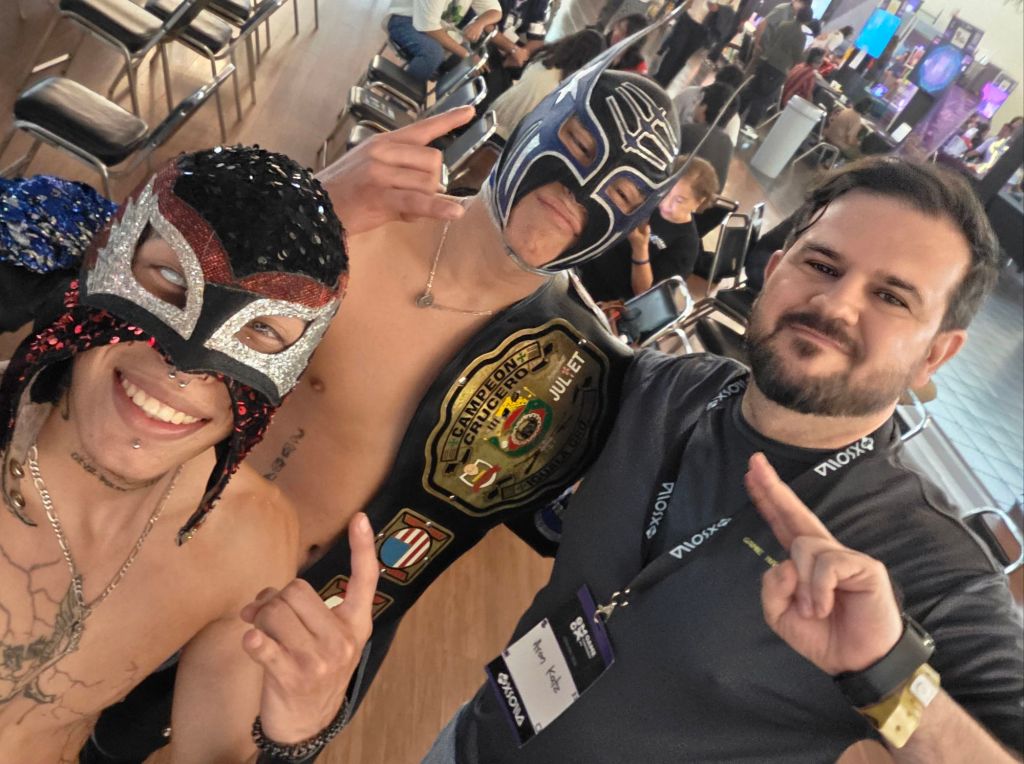
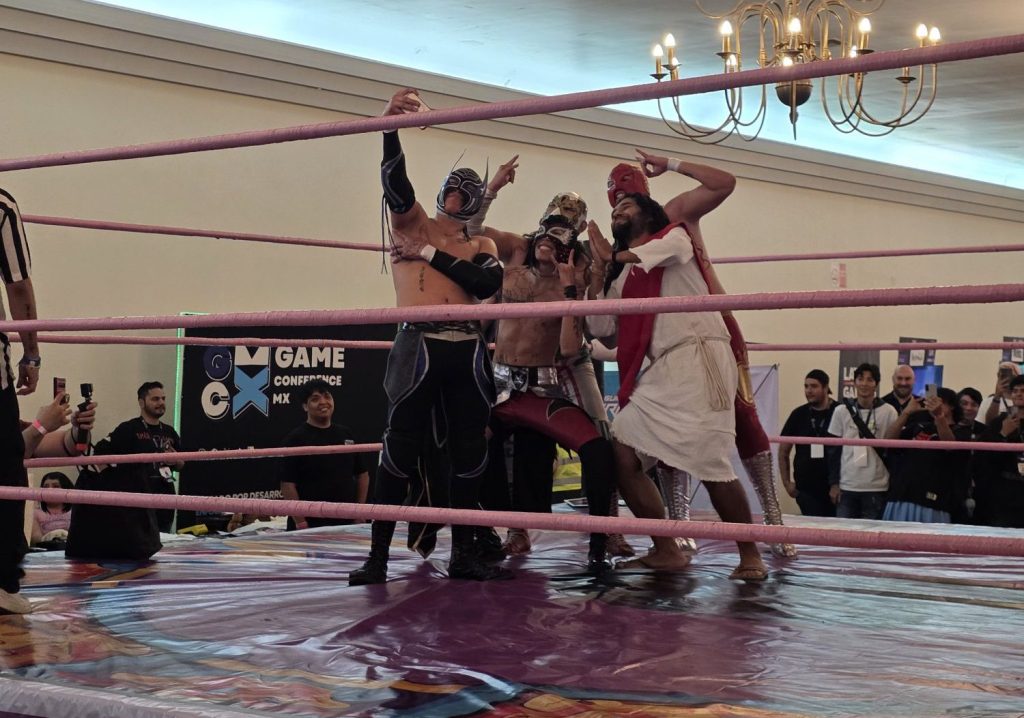
One of the activations I enjoyed most was for Arenas del Mal, a mobile game that literally brought a real wrestling ring into the middle of the venue and staged matches with actual wrestlers in front of the crowd. I thought it was an excellent marketing idea because, during the matches, practically everyone’s attention was drawn to the ring. It was impossible to walk past without looking at what was happening. My one suggestion for the developer would be to make better use of the wrestlers’ entrances by giving them T-shirts or some other visible element promoting the game itself. There were banners on all four corners of the ring, but I am sure more than one distracted visitor enjoyed the show without fully realizing what was being promoted or why there was a wrestling ring in the middle of GCMX. More visible branding on the wrestlers themselves would have connected that huge moment of attention to the game’s name even more effectively.
I also took the opportunity to reconnect with people I had met at other industry events. One of them was Ovidio Escobedo, whom I had already seen at Super Indie Games and then again at GamaCon. Ovidio is behind AlterGard, a platform focused on Viewer-Driven Gameplay that lets audiences directly influence game experiences. This time I got to see the platform in action at the event, and it is always good to run into projects you first heard about months ago and see how they are moving forward.
These encounters are also one of the reasons I increasingly value attending industry events regularly. The first time, you meet someone. The second time, you already have a conversation to pick up. By the third, they probably know who you are and what you do. The industry can seem enormous from the outside, but once you start showing up consistently, you realize this is exactly how professional relationships are built.
The GCMX Awards 2026
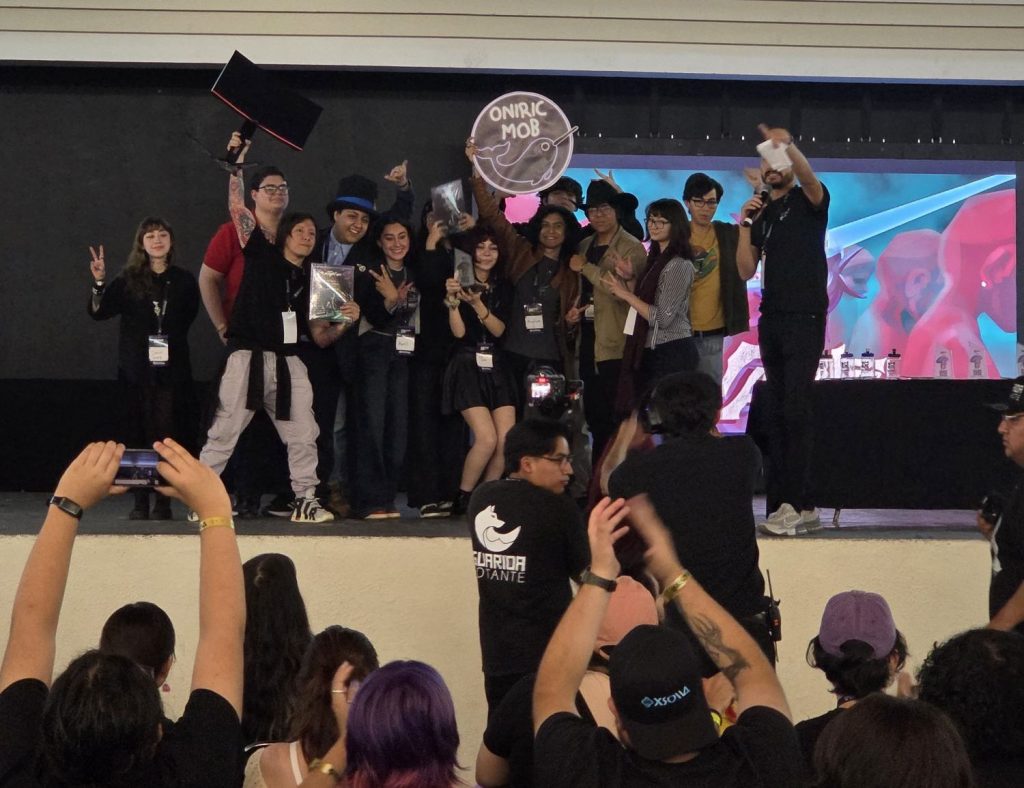
Before the closing ceremony came the GCMX Awards, where the audience voted for the winners among the Indie Spot projects. I particularly like this approach because the awards are not presented as a purely technical evaluation by a jury, but also as a signal of which games actually caught the attention of people who got to play them. There were five Champi awards in total, and Nabte took home two of them.
Champi Disruptivo (Most Disruptive): The Heart of Gold, by J3F33M1. A bullet heaven game with RPG elements in which each character has their own abilities, progression, and combat style. Players can upgrade equipment, evolve weapons, and collect cards while fighting hordes of enemies.
The Heart of Gold on Steam
Champi Retas (Competitive Spirit): Kayak with Friends, by Eonia Studio. A multiplayer kayak racing and competition game where players navigate rivers, challenge each other, and play both cooperatively and competitively.
Kayak with Friends on Steam
Champi Promesa (Most Promising) and Champi Viral: Nabte, by Oniric Mob. A first-person horror game set in Mexico in 1926. Players take the role of Remedios, trapped inside a psychiatric institution where she must explore, solve puzzles, and avoid threats without a conventional combat system.
Nabte on Steam
Champi del Pueblo (People’s Choice): Hapervil, by Anvia Studios and Mallow Games. A third-person psychological horror adventure starring Amaya and Wil, who wake up in an abandoned orphanage and must solve puzzles while uncovering its secrets.
Hapervil on Steam
What I liked most about seeing these projects win is that they reinforce an idea I have mentioned several times after attending events this year: I no longer want to talk about Mexican games purely in terms of “we should support them because they are Mexican.” These projects should aim to compete for attention with any indie game in the world. Nationality can be part of their identity, but the game needs to stand on its own.
The party is part of the event too
After the closing ceremony came the GCMX Party at Casa Patrice, and it brought me back to something I have said after GamaCon and other events: networking is not just about exchanging business cards or adding people on LinkedIn. Some of the best conversations happen after the formal program ends, when everyone can talk in a more relaxed setting.
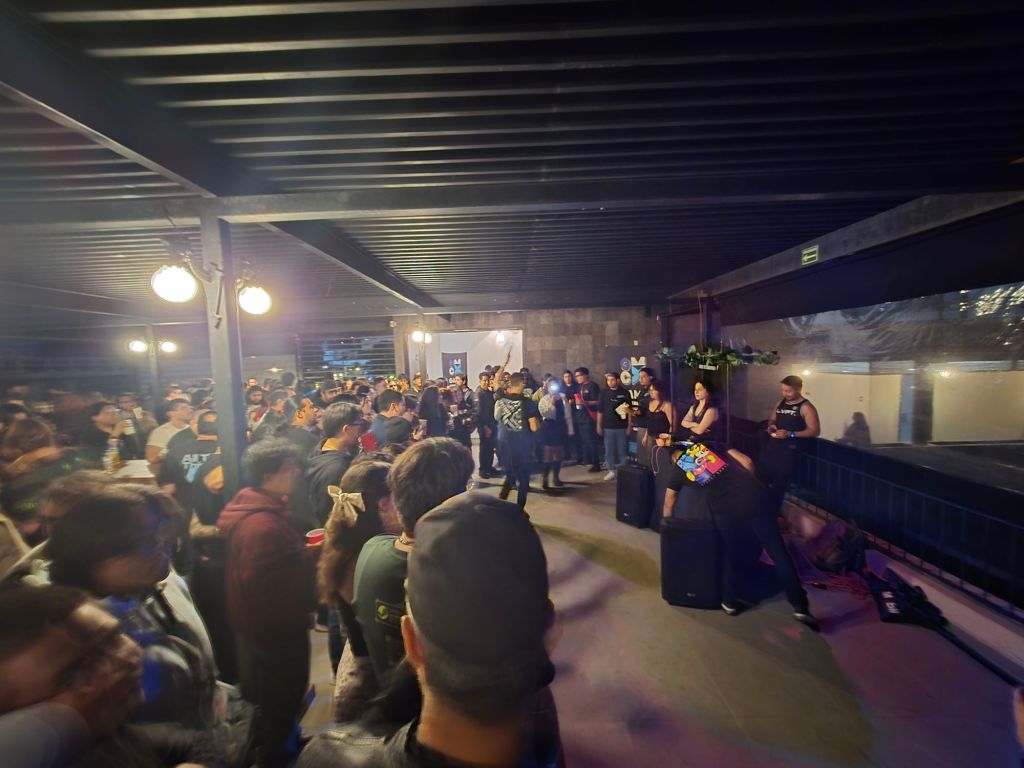
In my case, I ended up meeting two potential clients at the party, which alone shows that these activities are not just a fun extra. They are part of the professional experience. Of course, you should not show up trying to sell something to every person you meet, because you would probably achieve the exact opposite. It is about spending time together, learning what someone else does, sharing what you do, and allowing opportunities to develop naturally.
After attending Super Indie Games, GamaCon, and now GCMX over the past few months, each event has left me with something different. GamaCon was much more intimate and focused on building meaningful connections. Super Indie Games helped me better understand where Mexican game development stands today. GCMX, meanwhile, impressed me with how much content, how many projects, and how many people it managed to bring together over just two days.
The scale of the event helps show that we are no longer talking about isolated efforts, but about an ecosystem that is gradually connecting developers, studios, publishers, investors, and professionals from different disciplines. Beyond any number, though, what matters is what these gatherings make possible: projects gaining visibility, developers meeting publishers, students discovering that they can work in this industry, and professionals crossing paths throughout the year until, eventually, a conversation turns into an opportunity.
For anyone who wants to become part of the video game industry in Mexico, Game Conference MX is definitely an event I would keep on my radar. Not just to attend talks or try games, but to start meeting the people who are building this industry.
Because after several events this year, one thing has become increasingly clear to me: you can learn a tremendous amount about video games from a screen, but to really understand how the industry works, you also have to be there.