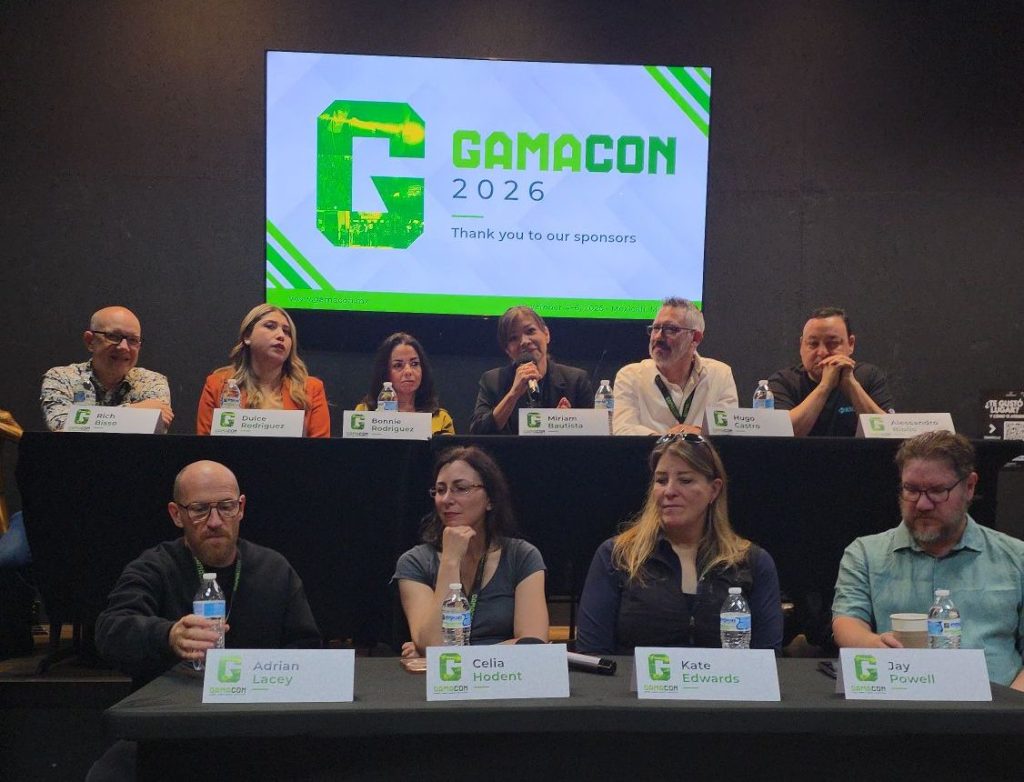
After attending events such as Tokyo Game Show and Super Indie Games, I arrived at GamaCon 2026 in Mexicali expecting another space to discover projects, attend conferences and do some networking. But from the first day, I realized GamaCon had a very different purpose. The priority here was not to fill an exhibition floor so the public could try the latest games, but to bring Mexican developers closer to publishers, investors and industry professionals who could help them turn their projects into real businesses.
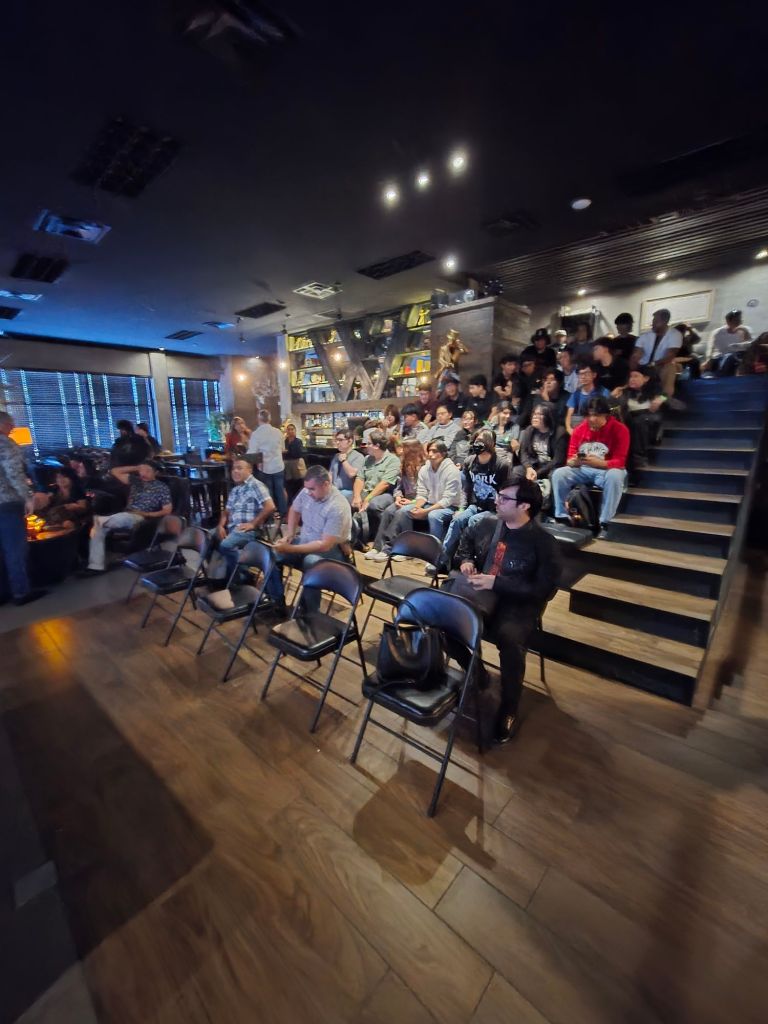
For me, as someone who works in marketing and is looking to become increasingly involved in the video game industry, this was probably one of the most valuable days I have experienced at an event like this. The environment helped a lot: less noise, less rushing around and many more opportunities to actually sit down and have a conversation with someone. Even the choice of Mexicali, a much smaller city than Tokyo or Mexico City, ended up working in the event’s favor. Its proximity to the United States and Baja California’s cultural and commercial relationship with both countries make it a natural meeting point for Mexican talent and international professionals.
GamaCon took place from November 4 to 6, 2026, with a clearly B2B focus aimed at developers, publishers, investors and professionals looking to do business within the industry. That orientation perfectly explains the feeling I had throughout those three days: you are not there just to show your game. You are there to learn how to turn it into a company, how to find allies and how to become part of the ecosystem for real.
DAY 1: WORKSHOPS AND CONFERENCES
UX does not simply mean designing a nice interface
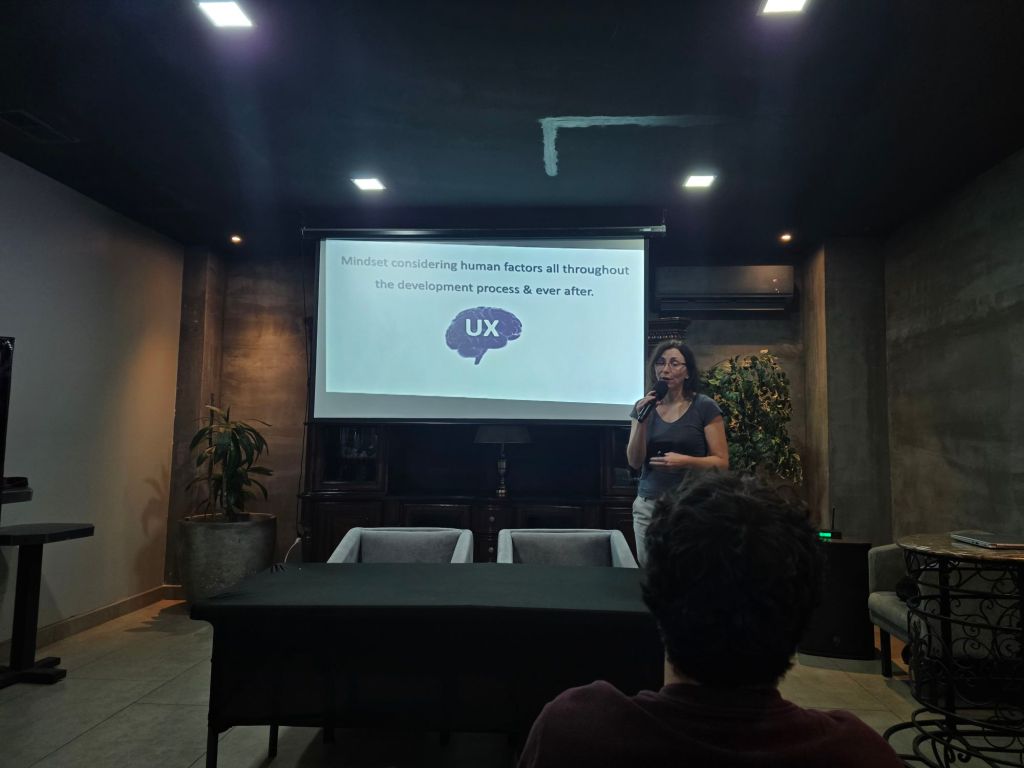
The first conference that really caught my attention was “Defining the Game UX Strategy For Your Studio”, presented by Celia Hodent, a Game UX consultant with a PhD in psychology and more than 18 years of experience in the industry. Her background includes Ubisoft, LucasArts and Epic Games, where she served as Director of UX and worked on Fortnite. She is also the author of several books on psychology, UX and game design.
I have some previous experience working around UX, but the talk still made me rethink several concepts. One of the most interesting points was understanding that UX in games is not limited to the interface. It means constantly thinking about what you want the player to do, what is stopping them from understanding it and which elements may be interfering with the experience you originally intended to design. In a game as complex as Fortnite, for example, there are an enormous number of systems competing for the player’s attention, and every decision has to help them understand what they can do and why they should do it.
For an independent studio, this can become a major challenge because there may not be a budget to hire a UX specialist from the beginning. But after listening to this talk, it became clear to me that the more systems a game has, the more important it is to seek some kind of external validation. It could be a consultant, someone interested in collaborating or even structured sessions with players. The important thing is not to design entirely inside a bubble and assume the player will understand exactly what the developer had in mind.
A video game does not end when the player reaches the credits
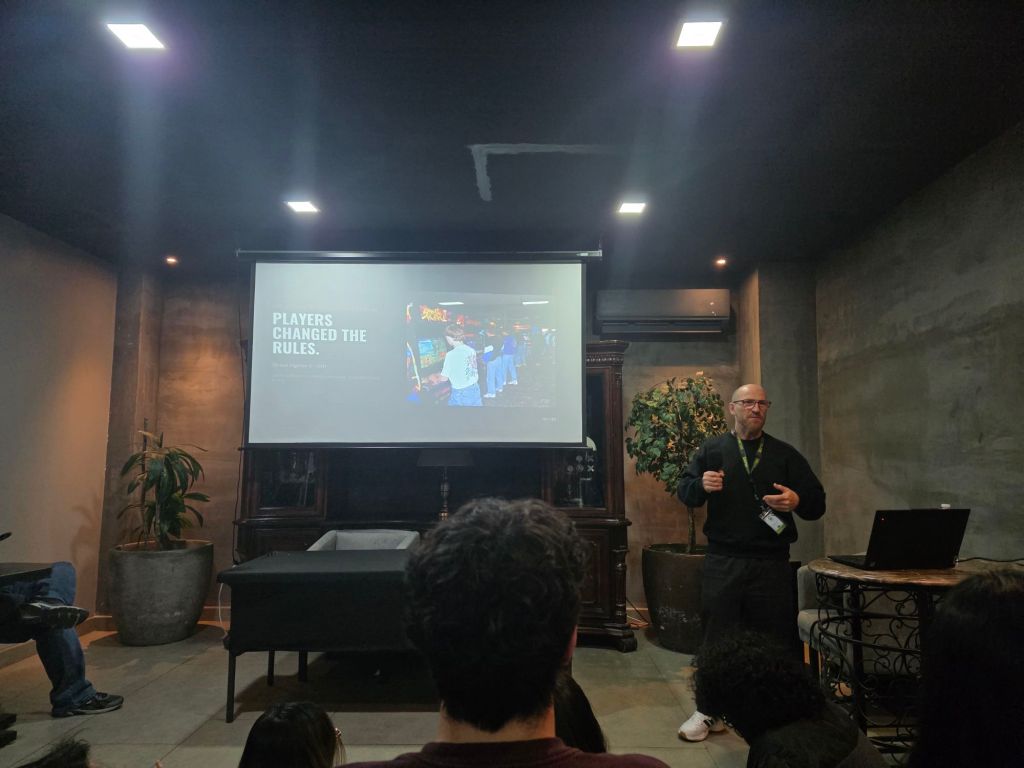
The next talk was “Independent Publishing-as-a-Service: Empowering Community-Driven Publishers”, by Adrian Fernandez-Lacey, an investor and executive producer with more than three decades of experience working in IP creation, franchise strategy, design, technology and community building around interactive products.
What interested me most was an idea that I increasingly see as important for any developer: you should not only ask whether someone will enjoy and finish your game. You also have to think about what happens afterward. Can the community continue interacting with it? Can they create content? Can they challenge the original rules? Can they generate stories you never designed?
When a player starts using a system in unexpected ways, creates content around the game or gets other players involved, the product takes on a life that no longer depends exclusively on what the studio originally designed. For an indie, reaching that level of participation can become an extremely powerful way to generate conversation and extend the commercial life of a title.
The conversation around artificial intelligence has already changed
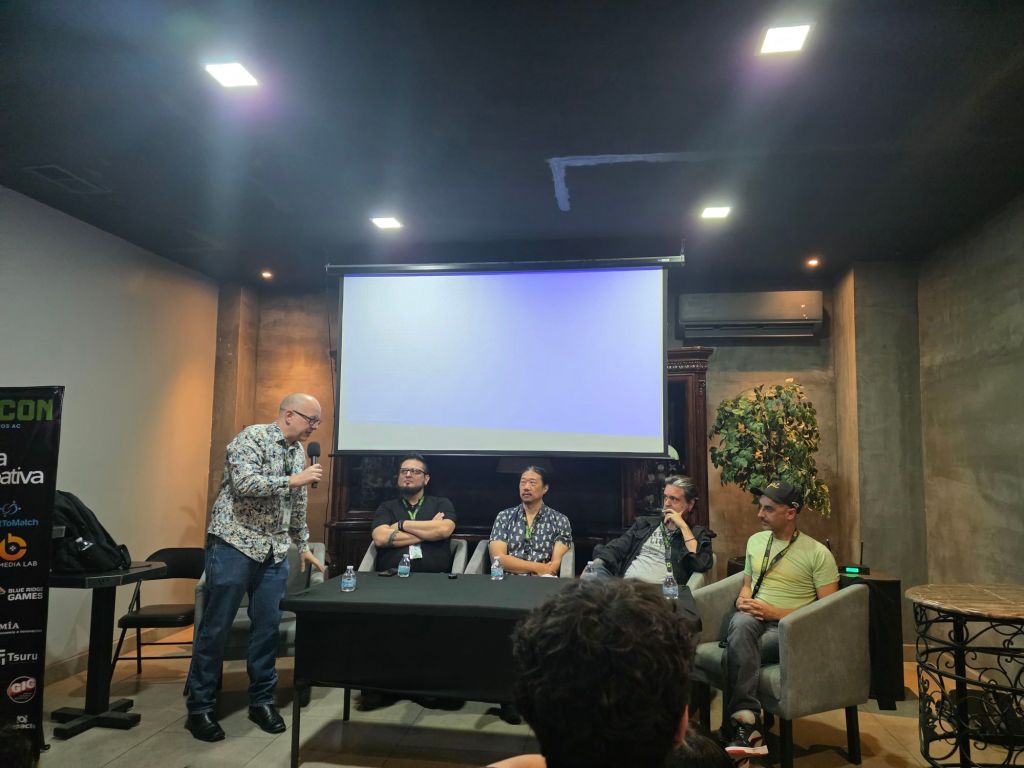
Then came “The Elephant in the Room: AI & Games”, a panel about one of the topics we will probably keep hearing about at conferences like this for years to come. Among the participants were Rich Bisso, a specialist with more than two decades of experience in development and technology; Ovidio Escobedo, founder and CEO of AlterGard, with more than a decade working in video games and digital products; and Alessandro Biollo, VP for Latin America at Xsolla and a professional with more than 17 years of experience in business development within gaming.
The conversation did not simply stay with the usual line that “AI is not going to replace people.” The reality is more uncomfortable: some tasks can disappear or be transformed, just as they have during other technological revolutions. For me, the most important conclusion is that ignoring these tools is not a strategy either. The advantage lies in learning how to use them to do what you already know how to do more quickly and efficiently, without losing creativity or human judgment.
Another particularly interesting possibility came up for small studios. Today it is much easier to build a prototype that can demonstrate an idea before having a complete team behind it. That prototype can later become a tool for seeking investment, publishers or talent capable of turning a proof of concept into a commercial product. AI does not replace the need to build a strong team, but it can reduce the distance between having an idea and having something tangible enough to start selling that vision.
Hugo Castro and the philosophy behind GamaCon
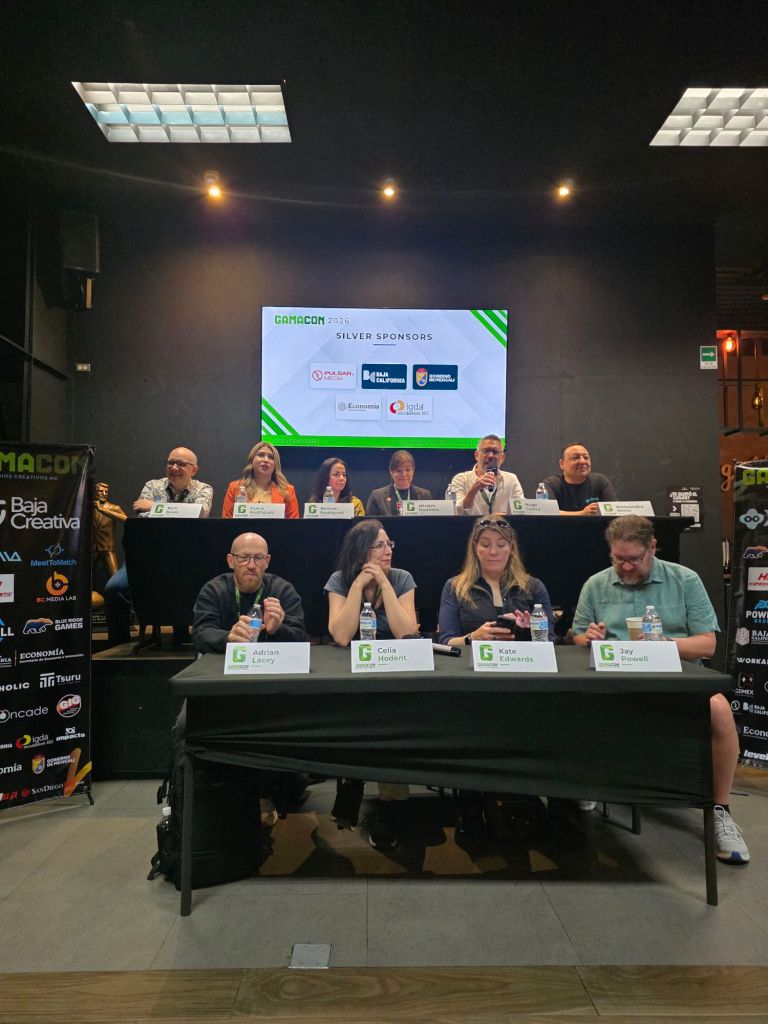
It was also important for me to spend more time with Hugo Abel Castro, whom I had met in person a month earlier at Super Indie Games after previously connecting through social media. Hugo is co-founder of GamaCon, CEO of BC Media Lab and one of the active promoters of the professionalization and international connection of Mexico’s video game industry.
He has also participated in institutional conversations around issues that directly affect the sector, such as the discussion surrounding the proposed tax on video games considered violent. I do not want to go too deeply into that topic because it would take this article into a political discussion that is not really its purpose, but it helps explain that we are talking about someone involved not only in organizing events, but also in broader conversations about the future of the industry in Mexico.
And I think that helps explain what he is trying to do with GamaCon. The idea is pretty clear: the video game industry is a business, not just a hobby. You can love games and have all the passion in the world, but if you want to build a career or a sustainable studio, you also need to learn about investment, contracts, production, publishing, marketing and professional relationships.
The second day was practically not about learning
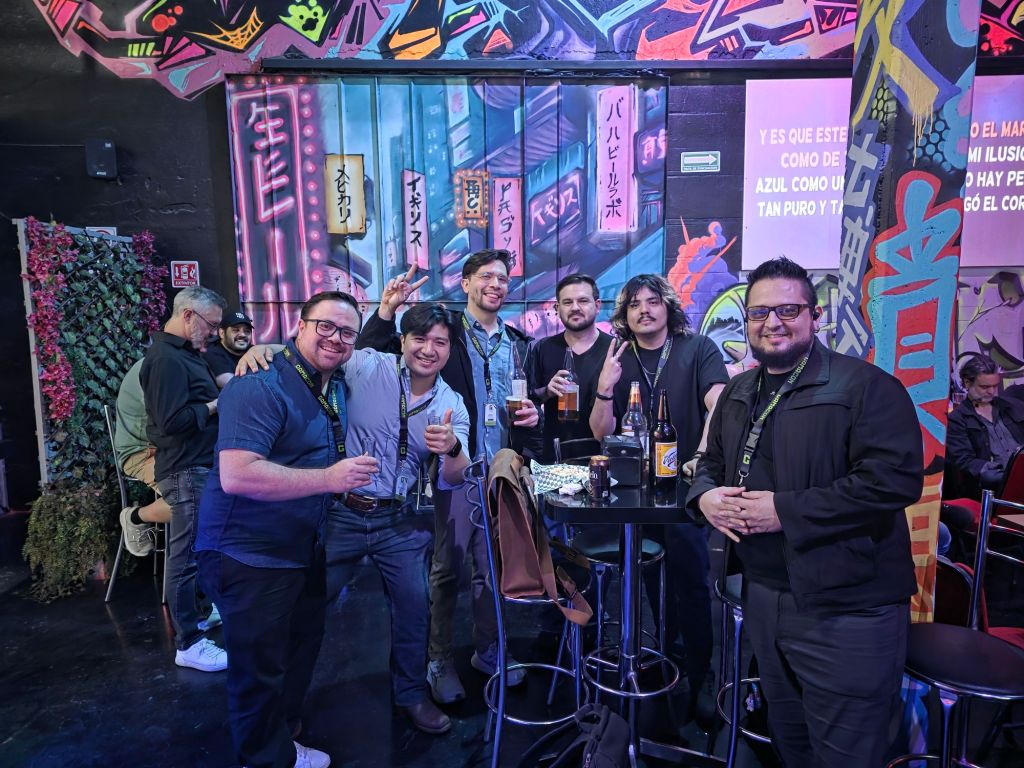
That may sound strange after talking so much about conferences, but the second day was probably just as important precisely because it was not about sitting down to listen to another presentation.
The idea was simply to spend time together. First came some very Mexicali-style tacos, then recreational activities, axe throwing, beer and finally more time to talk in an environment completely removed from a conference room. Those kinds of activities can look secondary when you see them on an event schedule, but once you experience them you understand why they matter.
When you stop talking exclusively about work, you begin to really get to know people. You discover what they do, what interests them, how they think and what kinds of projects they are looking for. A conversation that might have lasted five minutes in front of a booth can turn into an hour talking about games, professional experiences or simply anything else. And that trust changes the business conversation afterward.
The heart of GamaCon was in Valle de Guadalupe
The final day was probably the one that best represented the philosophy of the entire event. We left Mexicali and headed toward Valle de Guadalupe, on a route where the landscape changes almost completely from desert to mountains and vineyards. Once we were away from the distractions of the city, the most important part of the day began: the Video Game Elevator Pitch.
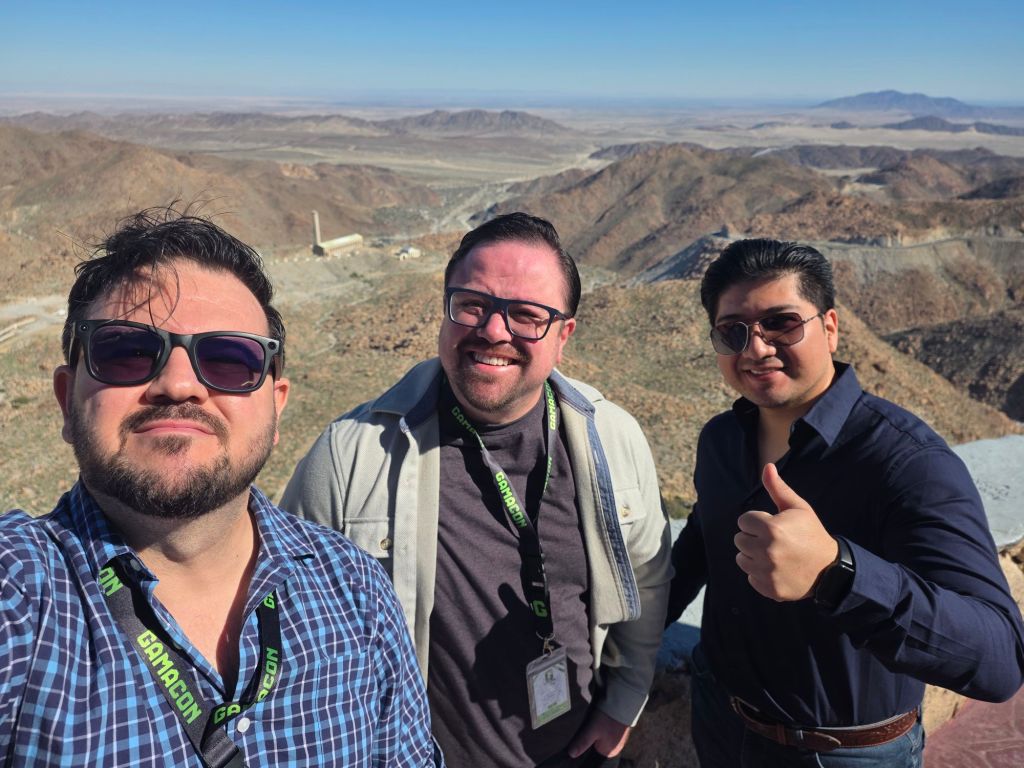
The goal was for different teams to present their projects in front of people who could give them feedback, connect them with publishers or open doors with investors. I cannot say that any of them closed financing or distribution during the event because I do not have confirmation of that, but there were connections and possible collaborations that some teams did not even expect to find. And when an unexpected conversation can open a professional door, it becomes difficult to measure the return of an event only in ticket sales or LinkedIn contacts.
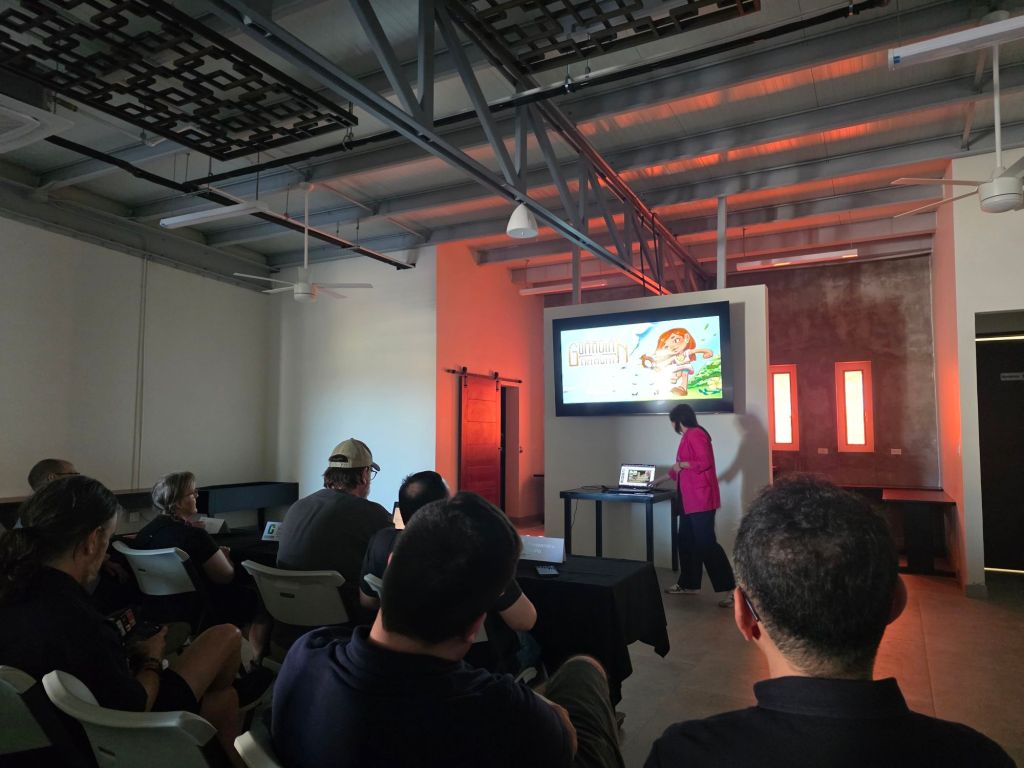
One of the projects presented was Guardian of the Nahual, by Choco Cosmos Games, a family-friendly action adventure starring Ketzalli, a young woman who explores environments inspired by Mexico, rescues animals and helps corrupted Nahual spirits. The game mixes exploration, platforming, collectibles and abilities related to spirit animals. Choco Cosmos is a women-led Mexican indie studio, and the game already has an official Steam page.
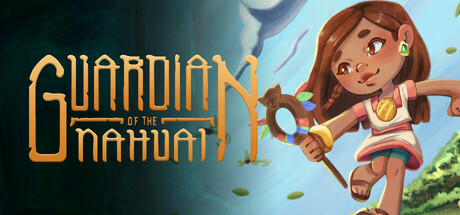
Guardian of the Nahual on Steam:
https://store.steampowered.com/app/4361150/Guardian_of_the_Nahual/
AlterGard, presented by Ovidio Escobedo, is a completely different case because we are not talking about a video game. It is an infrastructure platform for developers built around the concept of Viewer-Driven Gameplay, allowing a stream audience to directly intervene in what happens inside a game. Depending on the implementation, viewers can trigger challenges, send enemies, help the player or modify elements of the experience. The project is being developed from Guadalajara and aims to provide tools for creating much more interactive experiences between players and audiences.
AlterGard:
https://www.altergard.com/
Missing Crown, by Revenant Interactive, is a 3D Metroidvania currently in development. The story follows a prince with no memories as he explores Nocturnia, a kingdom destroyed by an ancient war, while trying to reconstruct his past. Revenant Interactive was founded in Guadalajara in 2023 and has taken the project to different video game development events and spaces in Mexico.
Missing Crown / Revenant Interactive:
https://www.revenantinteractive.com/
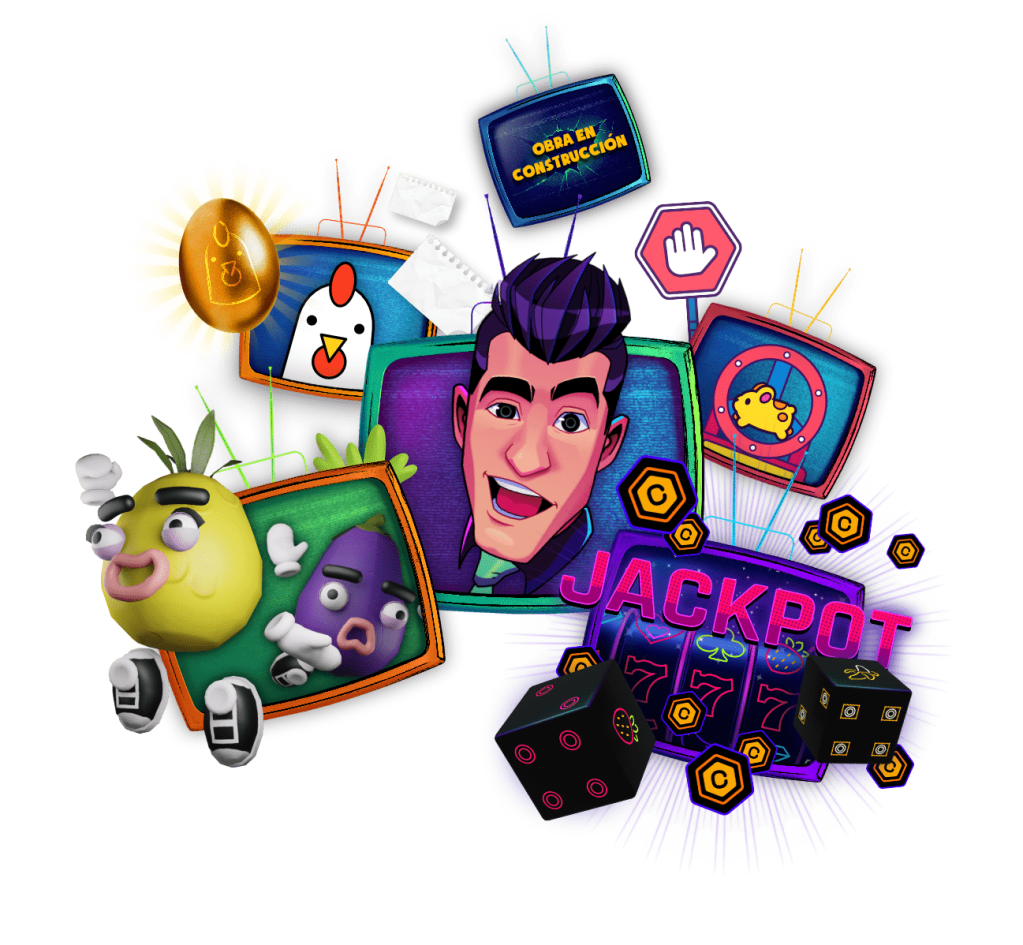
FIESTA.live, by Binmatter, is a multiplayer minigame platform designed mainly for gatherings and parties. The main experience runs from a computer while participants use their phones as controllers, turning a shared screen into the center of the game. Instead of operating like a traditional Steam release, the project is built as a multiplayer game-as-a-service platform accessible through its own infrastructure and mobile apps.
FIESTA.live:
https://www.fiesta.live/
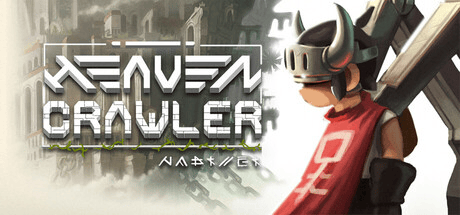
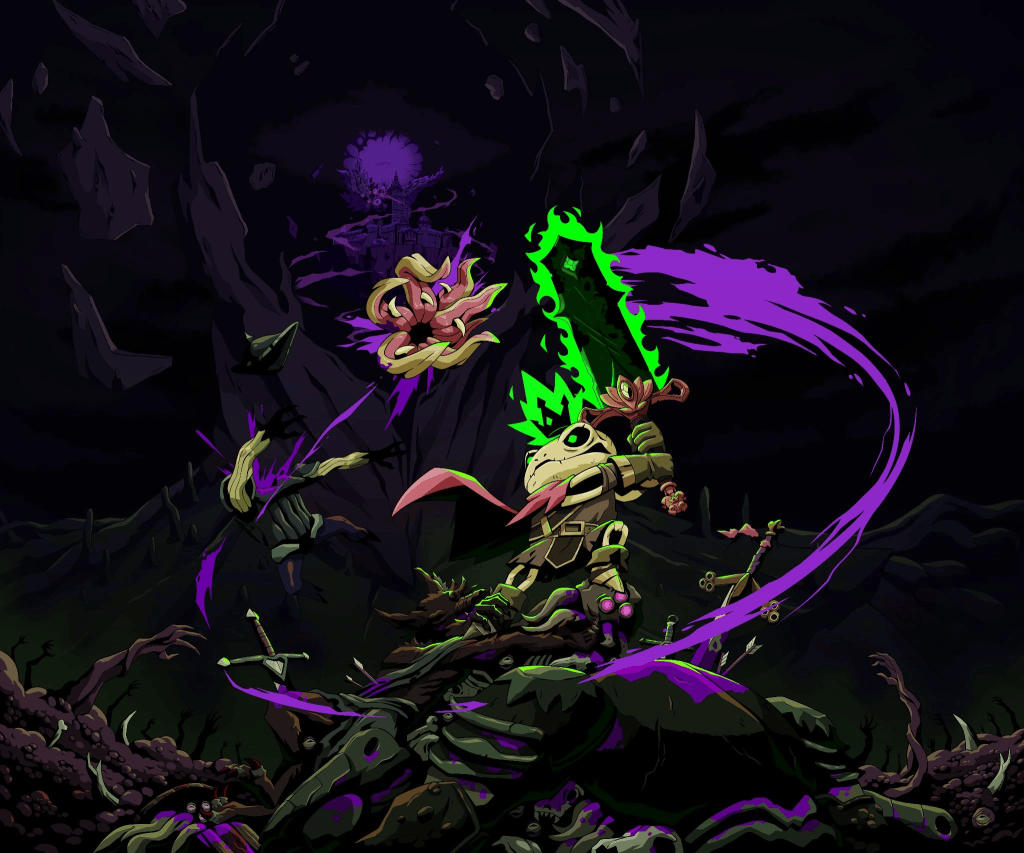
Finally, there was Heaven Crawler, developed by Carbon Machina and Critical Slash. It is an action roguelite with RPG elements set inside The Womb, a massive artificial tower built in an attempt to reach heaven. The player uses mechanical arms, masks, magic and relics while climbing through a structure filled with automatons, traps and bosses. Carbon Machina is a Mexican indie team, and Heaven Crawler represents its first commercial title. The project also won the 2025 Supernova Devs Challenge.
Heaven Crawler on Steam:
https://store.steampowered.com/app/3036360/Heaven_Crawler/
Sometimes one connection is worth the entire trip
After the pitch came the more relaxed part of the day: food, wine and a lot of conversations. Honestly, after the third or fourth glass I stopped keeping anything resembling a scientific count of which wines I was trying, but that was exactly when some of the most interesting conversations of the trip happened.
One of them was with Rich Bisso, with whom I was able to talk about artificial intelligence, development and video game marketing. And that sums up very well why small, focused events like GamaCon can offer a different kind of value than a massive convention. At an event with tens of thousands of people, you would probably see someone like Rich giving a conference. Here, you can end up sitting down with him and talking about concrete problems within the industry.
For someone who wants to seriously enter gaming, I think that difference matters a lot. You can be a developer, marketer, producer, publisher, distributor or come from a profession that you are still trying to connect with video games. At some point, you have to start entering these spaces, meeting people and allowing people to get to know you as well. Not only because you want to get something immediately, but because an industry is built through relationships that develop over time.
After several events this year, that is probably one of the clearest conclusions I have reached: it is not enough to say that you want to work in video games. You have to start showing up in the places where the industry is talking, doing business and building projects.
GamaCon was not the biggest event I have attended. Precisely because of that, it ended up being one of the most valuable.