
Day 1 – First Business Day
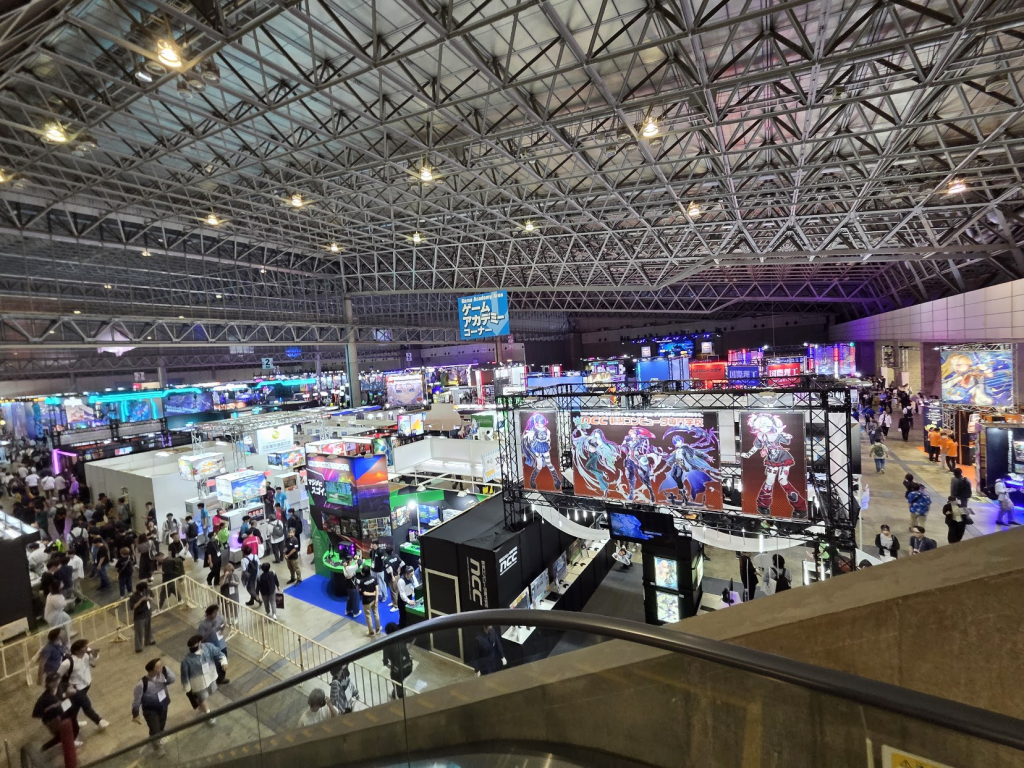
The first day at Tokyo Game Show was overwhelming in the best way. The size of the event is hard to describe. Walking through the halls, you immediately understand that live game events are still very much alive.
The business area was full of people in suits, backpacks, and branded shirts, all looking for the same thing: visibility. Big publishers like Capcom, Sega, Bandai Namco, and Konami built enormous displays. Each one was designed to keep you engaged, with bright lights, live demos, and themed areas that pulled you in.
What struck me most was how much traditional marketing still matters in Japan. Physical presence and direct interaction continue to be key to how these companies connect with players. Watching fans react to a booth or a live presentation is something you simply cannot replace with an online ad.
Nintendo’s setup was smaller than others, but their new Zelda demo still drew long lines. It proved that presence and storytelling matter more than size.
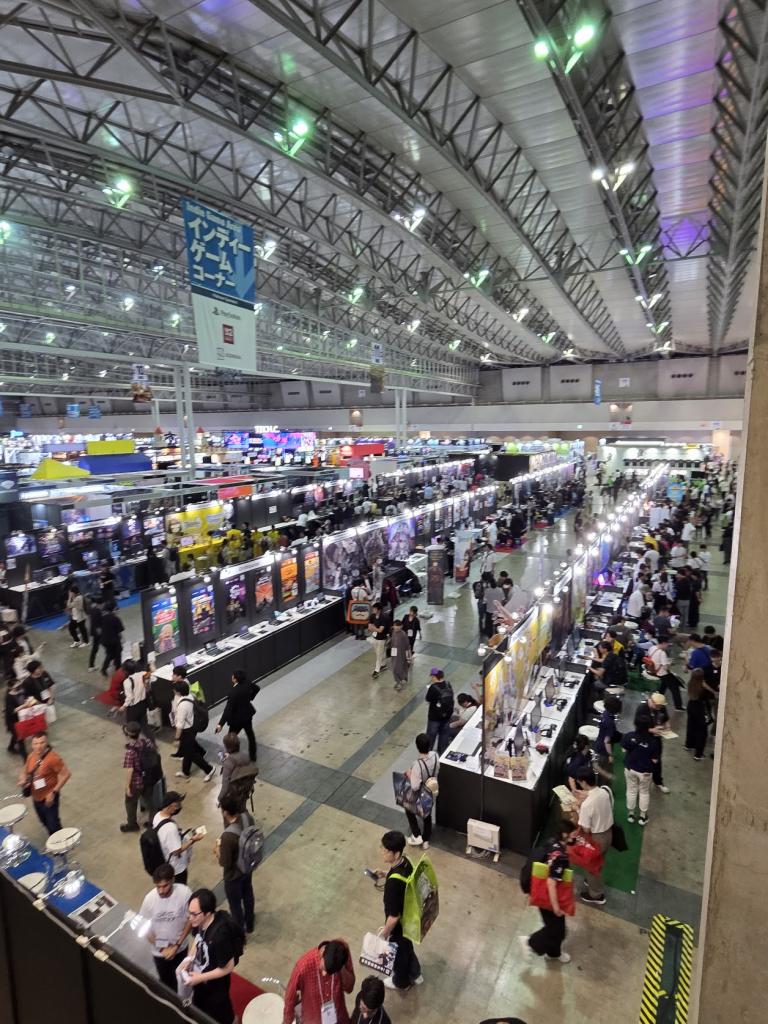
One entire building was dedicated to indie studios. Small teams from around the world presented their games on the same floor as major publishers. That balance between large-scale production and accessibility gives Tokyo Game Show a unique personality.
I left the first day convinced that Japan still sees marketing as an experience, not just a campaign. And that mindset works.
Day 2 – Building Connections and Understanding the Asian Market
By the second day, I had already found my rhythm. Once you know the layout, it becomes easier to move around, even with the language barrier. Most staff members are not fluent in English, but they always try to help.
This was the day I focused on meetings. One of the most valuable conversations I had was with Sanghun Lee from Alconost, a localization company that bridges English and Asian markets. Talking with him reminded me that localization is not just translation. It is a marketing decision. If a game does not sound or feel authentic to a culture, it will never connect with its audience.
Later, I met Mikhail Campos from Gamirror Games, a Mexican marketer who has lived in Japan for several years. We talked about how Latin America and Asia could learn from each other. His view was that Latin America has creativity and energy, while Asia has discipline and structure. Combining both could open new opportunities.
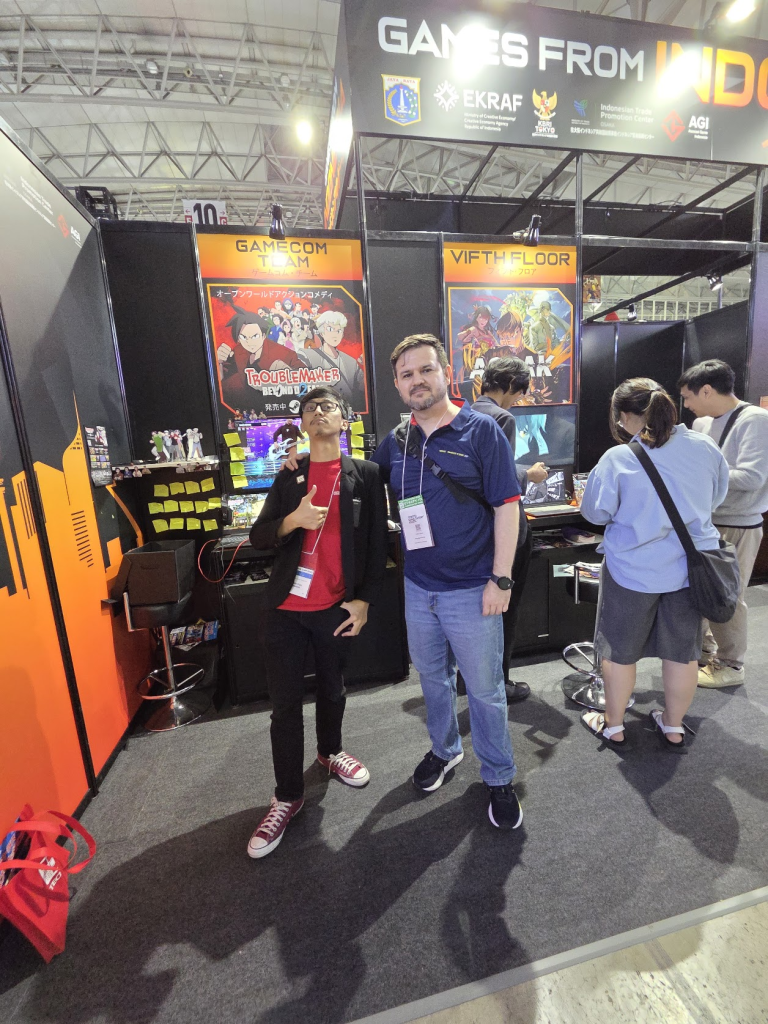
Another important meeting was with the CEO of Gamecom, a young founder leading a seventy-person studio. His team has built two games close to AAA scale, and their new title, Trouble Maker, mixes the tone of Yakuza with school-life humor. I played the demo and was impressed by the quality and confidence of the project. Studios from Southeast Asia are ready to play in the global market.
I also visited the Select Indie area, where I found a creative game called Denshattack! that felt like Tony Hawk with trains. Simple, fast, and addictive. Later, I met a Mexican indie developer showing a brawler with axolotl and wrestling characters based on real luchadores. They had changed direction after realizing that players preferred the multiplayer mode. That flexibility, listening to what players actually enjoy, is the foundation of both good development and good marketing.
After two business days, I understood why so many people call Tokyo Game Show the best place to build relationships in the industry. It is affordable compared to Western expos and full of real networking potential. Anyone planning to promote a game in Asia should come here at least once.
Day 3 – Public Opening Day
When the event opened to the public, the atmosphere changed completely. The same halls that felt busy before now felt crowded and loud. Families, kids, and cosplayers filled every corner. Lines for Zelda went on forever.
It is easy to forget how much emotion drives this industry until you see people reacting in real time. That connection between fans and games is what creates communities, not just customers.
I noticed something else that stood out. The organizers hand out a printed catalog listing every game at the show. On top of that, Steam runs a special Tokyo Game Show section highlighting many of those titles. It gives developers exposure in two places at once, both physical and digital.
That combination is the real power of events like this. Being part of TGS means showing your game in person and reaching new players online at the same time.
I spent some time revisiting the indie booths and talking to more exhibitors. I also stopped by the Tomtoc stand, a brand I already liked. By the end of the day, I was tired but motivated. The enthusiasm of the crowd reminded me why this industry exists.
Day 4 – Closing Day and Takeaways
Sunday was supposed to be the quiet day, but it was not. From the moment I walked in, the venue was packed again. Every major booth was running at full speed.
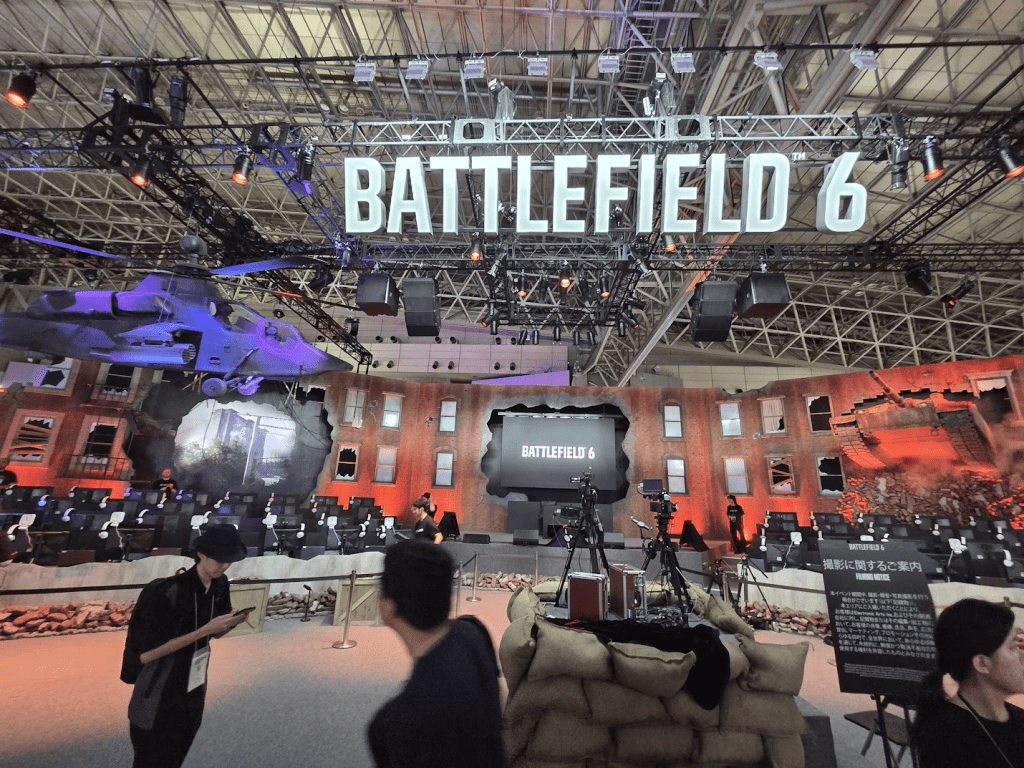
Sega, Nintendo, Riot, and EA all delivered incredible setups. The Battlefield display even included a life-size tank and helicopter surrounded by rubble and smoke effects. It felt like stepping inside the game. That kind of experiential marketing turns interest into emotion, and emotion into sales.
For professionals, TGS offers three layers of exposure: the live experience, the digital presence through Steam and press coverage, and the printed materials that continue circulating after the show. Those combined touchpoints give developers and marketers a reach few campaigns can match.
I decided to spend my last afternoon as a fan. I tried Silent Hill F, a game I had not planned to play, and left genuinely curious about it. That moment of spontaneous interest is exactly what we all try to create as marketers.
Leaving the event, I kept thinking about how much value still comes from real, human contact. Every conversation, every handshake, every reaction adds up to something that algorithms cannot measure: trust. And trust is what truly sells games.
For anyone working in gaming, whether development or marketing, Tokyo Game Show is more than just another event. It is proof that people, not platforms, are what keep this industry alive.