

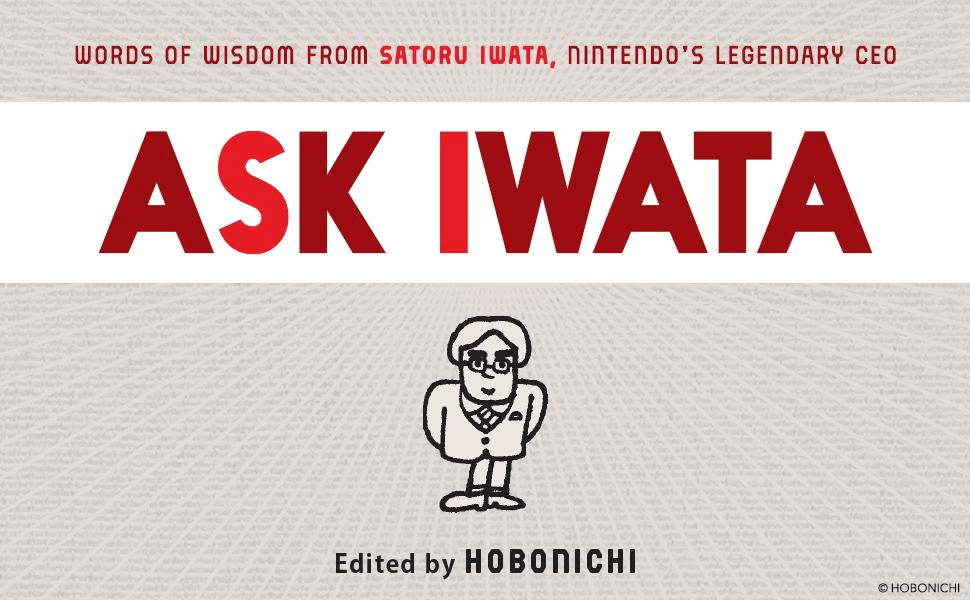
A couple of years ago, I got the chance to read the semi-biographical book that recounted multiple interviews with Nintendo’s late CEO Satoru Iwata. It automatically became one of my favorite books, not just because of its video game nature, but also for inspiring insights into how he became a beloved leader within the company.
Of course, the book is full of so many insights on the way Iwata thought it was the best way to apply the best marketing practices according to Nintendo’s philosophy. I highly recommend you to read the book if you’re as enthusiastic and passionate about games as I am. But I wanted to share some really cool quotes from the book based entirely on game marketing. Here they are for your reading pleasure:
- Expanding the market by reaching new audiences is essential for growth: This insight stems from Iwata’s experience working with Shigesato Itoi on EarthBound (released as Mother 2 in Japan). Itoi’s vision for EarthBound, encapsulated in the tagline ‘Grown-ups, kids, the girl next door,’ resonated deeply with Iwata and informed his mission to expand the gaming population as president of Nintendo. He believed that reaching beyond the traditional gamer demographic was essential for the industry’s future.
- Simplicity and ease of use are key factors in attracting a wider audience: Iwata believed that complexity could be a barrier to entry for new gamers. He championed the idea that games should be intuitive and accessible, even for those unfamiliar with traditional gaming conventions. This belief is reflected in the design of the Wii, where the controller was intentionally designed to resemble a familiar TV remote to make it more approachable for non-gamers.
- Marketing should focus on communicating the value proposition of the product clearly and concisely: Iwata recognized the importance of communicating the unique benefits of Nintendo’s products to a wider audience. With the Wii, the marketing focused on its intuitive motion controls and family-friendly appeal, highlighting the console’s ability to bring people together through shared gaming experiences.
- Innovation and uniqueness are essential for standing out in a crowded market: Iwata firmly believed in differentiating Nintendo from its competitors by exploring unconventional ideas and technologies. This philosophy is exemplified in the Nintendo DS, a console with two screens and a touch screen, a concept that emerged from Hiroshi Yamauchi’s challenge to ‘make a game console that has two screens.’
- Strong branding, including product names, can play a significant role in attracting customers: Iwata placed a high value on choosing names that would resonate with the target audience and accurately reflect the product’s identity. For the Wii, he insisted on calling the controller a ‘remote’ to emphasize its familiarity and ease of use. Similarly, he ensured that games like Wii Sports and Wii Fit incorporated ‘Wii’ in their titles to reinforce the console’s brand identity.
- Providing a positive user experience is essential for building customer loyalty: Iwata’s philosophy revolved around creating games that sparked joy and fostered positive memories. He believed that a game should not just be engaging but should also leave a lasting impression on the player. This is evident in his appreciation for the diverse and emotionally resonant experiences offered by the Mother series, which he cited as an inspiration for his work at Nintendo.
- Continuous improvement and adaptation to market changes are crucial for long-term success: Iwata recognized that the gaming landscape was constantly evolving. He emphasized the importance of staying ahead of the curve by adapting to new technologies, trends, and customer preferences. This is apparent in his decision to embrace online gaming cautiously, acknowledging its potential while expressing concerns about its limitations and potential negative aspects.
- Understanding and leveraging customer feedback is essential for product development and improvement: Iwata believed in the power of observation and incorporating user feedback into the development process. This is best illustrated by Shigeru Miyamoto’s practice of ‘watching over the shoulder’ of first-time players to identify areas of confusion or difficulty. Iwata adopted this approach, valuing the insights gained from observing how people interacted with games.
- Building trust with customers is essential for establishing a strong brand reputation: Iwata emphasized the importance of transparency and honesty in all of Nintendo’s communications. He believed in building long-term relationships with customers based on mutual respect and understanding. This is reflected in his commitment to explaining the company’s decisions and motivations clearly, as he did with the introduction of the controversial ‘play history’ feature on the Wii.
- Understanding customer needs is crucial for creating products that resonate with them: Iwata stresses the importance of looking beyond superficial trends and understanding the underlying motivations and desires of the target audience. This approach challenged the industry to reconsider what constituted a ‘game’ and opened up new avenues for growth and innovation.
These marketing insights, deeply rooted in Iwata’s personal experiences and philosophy, highlight his unique approach to leadership and his dedication to creating products that brought joy to people’s lives. How many of these do you think you can apply to your game marketing strategy?

 Game Marketing XP